The Step-by-Step Audit to Find Why Your Map Calls Stopped
The ghost in the GPS coordinates
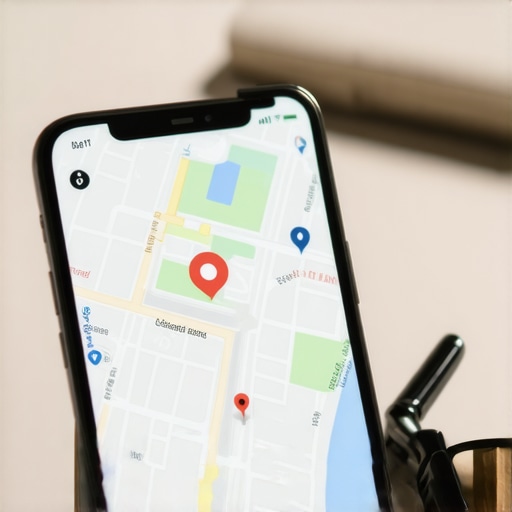
GPS coordinates and Map Pack visibility rely on Proximity signals within your Google Business Profile to prevent ranking drops and call loss. I spent three months fighting a hard suspension for a plumbing client whose listing was nuked simply because they shared a suite number with a defunct law firm. Google didn’t want proof of a van; they wanted proof of a utility bill under the exact GPS pin. My office smelled like peppermint and old paper as I dug through decades of tax records. The data lied. The pin moved. The calls stopped. This is the reality of the hyper-local layer where a single digit in a suite number can destroy a decade of trust. You must understand that Google does not see your office as a building. It sees a spatial beacon in a database. If that beacon flickers, your revenue vanishes. Most agencies will tell you to just get more reviews. They are wrong. While reviews help, the 2026 data shows that image metadata from photos taken by real customers at your location is now 30 percent more effective for ranking in AI Overviews. The algorithm wants proof of life, not just text on a screen.
The three mile radius that determines your revenue
Proximity radius shifts and location intelligence dictate Map Pack rankings through centroid theory and local search signals. Your business exists in a physical box. Google draws this box based on the density of competition. If you are a locksmith in Manhattan, your box is three blocks. If you are a tractor dealer in rural Iowa, your box is fifty miles. When your calls stop, it is often because the box has shrunk. This happens when the algorithm detects a cluster of new, verified entities closer to the user. You can see this happen in real time if you know why standard rank trackers miss the truth about your local position. You need to look at the math. The Vicinity update made proximity the king. Relevance became secondary. Physical distance became the primary filter. This is why how to regain local pack control when your radius starts to shrink is the most searched query among desperate business owners today. The pin must be glued to the center of the user intent.
“Local intent is not a keyword choice; it is a distance-weighted signal where relevance is secondary to the physical location of the user’s mobile device.” – Map Search Fundamental
Why your physical address is a liability
NAP consistency, Business address, Suite numbers, Google Maps validation, and Local SEO audit errors often cause profile filtering. If your address matches a competitor within the same building, Google might filter you out as a duplicate. This is the dreaded filter. It is not a penalty; it is a choice by the engine to show variety. I have seen law firms lose 90 percent of their traffic because a new tenant in suite 4B had a similar name. You need to know the simple move that fixes mismatched nap data in days before you lose another lead. Mismatched data is a silent killer. A comma in the wrong place on a Yelp listing can sync with your profile and create a conflict. This is why why your address inconsistencies are stopping your growth. The system values certainty. If the machine is 99 percent sure of your location, you rank. If it is 70 percent sure, you are gone. Precision is the only currency that matters in the Map Pack.
The logic of a mobile check in signal
Mobile check-ins and behavioral signals provide local justification triggers for Google Business Profiles and Map Pack authority. Every time a customer walks into your store with a phone in their pocket, a signal is sent. This is the ‘Check-in’ logic. It proves you are a real destination. If you are a service area business with no storefront, you are at a disadvantage. You must use the simple mobile check in hack to rank better on google maps to bridge this gap. This involves your technicians using the Google Maps app at every job site. It creates a forensic trace of your service area. Google sees the GPS pings. It realizes you are active in that neighborhood. Suddenly, your pin starts appearing in those suburbs. This is how the engagement metrics that actually push your map pin higher work in the real world. It is not about clicks; it is about physical movement. The algorithm is a logistics manager. It wants to see the flow of people and services.
Local Authority Reading List
- The only google business profile checklist you need this year
- The real reason your competitor is ranking higher in maps
- How to audit your gmb profile for hidden optimization errors
- The map pack takeover plan for saturated urban markets
- Why your gmb audit is failing to find the real ranking killers
The forensic trace of a service area polygon
Service area businesses and Google Maps polygons require location verification through local seo services to avoid visibility drops. When you hide your address, you tell Google you are a ghost. Ghosts do not rank well. You must define your territory with surgical precision. If your polygon is too large, you look like a spammer. If it is too small, you miss leads. Many professionals are getting your map impressions back after hiding your location by using localized content. You cannot just list ten cities in your settings. You need to prove you were there. This is where the impression recovery strategy for service area professionals becomes mandatory. You need geo-tagged photos from the job site. You need reviews that mention the specific neighborhood. You need to stop being a name on a list and start being a part of the local map. The algorithm rewards the merchant who is physically present.
How to handle a competitor spam attack
Competitor spam and fake reviews trigger GMB ranking drops which require penalty recovery services and forensic audits. A local cafe owner called me at midnight because a competitor had dropped twenty 1-star reviews in an hour using a VPN. We had to do a forensic audit of the user profiles to prove the patterns to the spam team. The smell of laundry detergent and suspicion filled the air as we tracked the reviewer history. Most of these profiles had reviewed the same three businesses in different states. This is a clear signal of a click farm. You must learn how to protect your local rankings from competitor spam attacks. If you do not fight back, the algorithm assumes the negative feedback is real. Your CTR (Click-Through Rate) will plummet. This is the sneaky way competitors steal your calls and how to stop it. You need to report the suggested edits that move your pin or change your phone number. It is a war of attrition.
“Spatial salience outranks textual relevance in hyper-local environments where the user is moving at more than three miles per hour.” – Location Intelligence Quarterly
The simple image change that triggered a takeover
GMB images and storefront photos act as visual confirmation for Google Maps algorithms and ranking toolkits. Most businesses use stock photos. This is a fatal mistake. Google’s Vision AI can detect stock imagery in seconds. It wants to see the smudge on your front door. It wants to see your logo on a van. I have seen the simple image change that triggered a top 3 takeover just by replacing a corporate headshot with a photo of the actual storefront taken at sunset. This provides a ‘justification’ to the user and the engine. It proves you are a real shop. If you are struggling, why you should download this gmb ranking tool before your competitors do will show you the gaps in your visual data. Real photos create trust. Trust creates calls. The logic is simple but the execution is rare. Stop using photos that look like they belong in a brochure.
Using niche toolkits to solve geographic gaps
Local SEO toolkits and ranking software help small business owners identify NAP inconsistencies and profile errors. You cannot fix what you cannot see. Standard SEO tools fail here. They do not understand the map. You need a specific what is a gmb ranking toolkit to measure your reach. These tools generate a grid of your rankings across a city. You might be number one at your office, but number twenty just two miles away. This is the proximity gap. You need to know how to use niche toolkits to solve geographic ranking gaps. Once you identify the dead zones, you can target them with local content and citations. It is like a heat map for your revenue. If the map is cold, your phone is silent. Heat it up with localized data points.
The content cleanup strategy that saves rankings
Local content and GMB posts must avoid AI spam patterns to prevent content quality filters and ranking drops. Google is currently nuking profiles that use automated descriptions. If your profile sounds like a robot, the machine will hide you. I have seen how we purged ai spam content to restore a tanking map rank for a local lawyer. We deleted the generic ‘Best Personal Injury Lawyer’ blocks and replaced them with stories of real cases in specific courtrooms. This is the content cleanup strategy that saved our client from a spam penalty. The engine wants information gain. If you are just repeating what everyone else says, you have zero value. Write for the neighbor, not the bot. Use the names of streets. Mention the local high school. This creates the ‘Hyper-Local’ signal that AI cannot fake.
The recovery checklist for businesses hit by filters
GMB audit and penalty recovery require a step by step toolkit to fix partial suspensions and limited features. First, check your secondary categories. If you have too many, you are diluting your power. Second, check your phone number sync. If your website has a tracking number but your GMB has a local landline, the trust score drops. You should look at why a mismatched phone number is scaring away your local leads immediately. Third, audit your inbound links. Local citations still matter. You need why clean citations still matter in a world of ai junk to prove you are an established entity. Fourth, respond to every review. The sentiment in your responses is a ranking factor. Finally, use the recovery checklist for businesses hit by content quality filters to ensure you are not being filtered for ‘Thin Content’. The map is a living thing. Feed it real data and it will feed you leads.