The 3 tools every local business needs to monitor their search toolkit
I spent three months fighting a hard suspension for a plumbing client whose listing was nuked simply because they shared a suite number with a defunct law firm. Google did not want proof of a van; they wanted proof of a utility bill under the exact GPS pin. This was not a marketing problem; it was a logistics failure. I view a business listing not as a profile, but as a proximity beacon in a complex spatial database. When you understand the microscopic math of GPS coordinate salience, you stop chasing generic traffic and start dominating the map pack. To survive in this environment, you need more than a basic dashboard. You need a toolkit that functions like a dispatch system, tracking the flow of spatial signals and interaction metrics in real time.
The ghost in the GPS coordinates
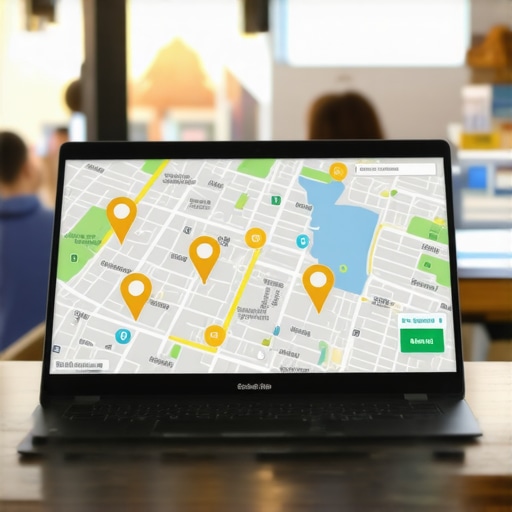
Grid tracking tools and proximity monitors are the foundation of a modern local search toolkit. These platforms utilize GPS coordinate clusters, IP-based location signals, and centroid mathematics to visualize where your business profile appears in the Google Map Pack across a specific geographic service area or neighborhood. Traditional rank trackers are often useless because they check rankings from a single data center rather than a user’s mobile device. This is why standard rank trackers miss the truth about your local map pack spot in the real world. I have seen businesses that rank number one at their office but vanish three blocks away. This happens because of the proximity filter, a silent algorithm that shrinks your reach based on the density of your competitors. To combat this, you must use a tool that provides a visual heat map of your positions. By analyzing these grids, you can identify exactly where your proximity beacon is fading. This data allows you to focus your local signals on specific neighborhoods rather than wasting resources on a city-wide strategy that is mathematically impossible to win. Proximity is a distance-weighted signal where relevance is secondary to the physical location of the user’s mobile device. If you are not monitoring these grid points, you are flying blind. You might think you are winning, but the logistics of the map pack tell a different story. Use these tools to find the edges of your influence and then apply the simple mobile check-in hack to rank now on maps without more reviews to push those boundaries outward.
“Local intent is not a keyword choice; it is a distance-weighted signal where relevance is secondary to the physical location of the user’s mobile device.” – Map Search Fundamental
Why your physical address is a liability
Review forensic tools and sentiment analysis software allow you to monitor the integrity of your customer feedback loop. These systems track review velocity, account trust scores, and sentiment trends to protect your profile from mass review removal or competitor attacks that trigger algorithm filters. I recently dealt with a review extortion case where a local cafe owner called me at midnight because a competitor had dropped twenty 1-star reviews in an hour using a VPN. Without a forensic audit tool, proving this to Google is nearly impossible. You need a toolkit that alerts you to spikes in activity and analyzes the history of the profiles leaving feedback. Google’s automated spam filters are aggressive; they often delete legitimate reviews if they lack the necessary interaction signals. This is why you must understand why your 5 star reviews arent moving the needle on maps and use tools that highlight the keywords your customers are actually using in their descriptions. Interaction signals are the fuel of the map pack. If a user leaves a review but never clicked for directions or viewed your photos, that review carries less weight. A high-quality toolkit will help you track these secondary metrics. It is about the forensic trace of a real customer journey. If Google sees a review from a profile that has no location history in your city, they will likely filter it. Monitoring these patterns is the only way to maintain a clean reputation while scaling your local presence. For those struggling with sudden losses, choosing a ranking toolkit that focuses on actual user signals is the most effective way to stabilize your position after an algorithm shake up.
Local Authority Reading List
- The only google business profile checklist you need to stay in the 3-pack
- How to use local map pack toolkits to beat national competitors
- Why proximity filters are the enemy of service area businesses
- The software pros use to audit map profiles in under 10 minutes
The three mile radius that determines your revenue
Category research and keyword mapping tools are essential for identifying the specific LSI keywords, primary business categories, and secondary service attributes that trigger local justification snippets. These tools help you discover the exact JSON-LD attributes that Google’s AI uses to categorize your business entity for voice search and map queries. Most owners pick a category and forget it, but the algorithm shifts. You might be listed as a plumber when the market is currently rewarding those listed as emergency heating repair. A proper toolkit will show you what the winners in the top three are doing differently. It is about identifying the gaps in your entity verification. I have seen cases where a failed category update killed visibility for weeks because the owner did not have the data to see the shift in local intent. Furthermore, you should be looking at the metadata of the images you upload. While many claim EXIF data is ignored, the interaction signals from users viewing photos taken at your physical location are undeniable. Use your toolkit to audit your photo engagement and compare it to your competitors. If they have more authentic, customer-uploaded content, they will likely win the proximity battle even if their office is further away. This is the microscopic reality of the local algorithm. You are not just managing a listing; you are managing a spatial data point. To get the most out of your efforts, ensure you are providing the specific evidence google wants to see for gmb reinstatement if you ever fall victim to a filter. Success in the map pack requires a logistics-first mindset where data trumps aesthetics every single time. Stop guessing and start tracking the metrics that actually move the pin.
“Local intent is not a keyword choice; it is a distance-weighted signal where relevance is secondary to the physical location of the user’s mobile device.” – Map Search Fundamental