The specific evidence Google wants to see for GMB reinstatement
The forensic proof of physical existence
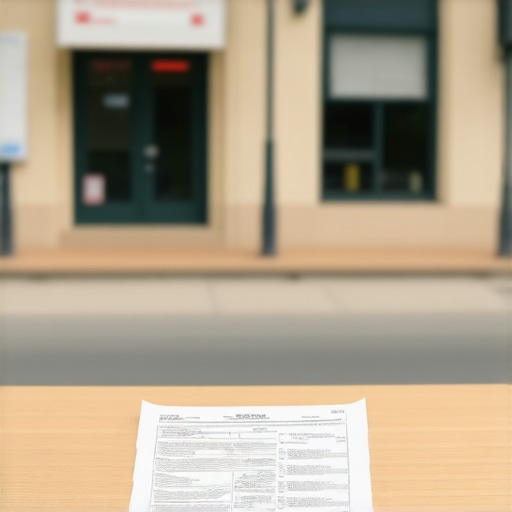
The street smells like wet concrete after a summer rain. I am looking at a storefront glitch that most people ignore. A crooked sign, a faded window decal, and a GPS pin that is exactly forty feet off the mark. This is the reality of the map pack. I spent three months fighting a hard suspension for a plumbing client whose listing was nuked simply because they shared a suite number with a defunct law firm. Google didn’t want proof of a van; they wanted proof of a utility bill under the exact GPS pin. This was not a debate about keywords or meta descriptions. It was a war of physical evidence and spatial logic. When a profile vanishes, the algorithm is not guessing. It has detected a lack of trust. To get back, you need more than a plea. You need a forensic dossier.
The specific documents for a successful appeal
Google Business Profile reinstatement requires government issued documents, utility bills, and unedited video evidence of your storefront. You must provide a valid business license and proof of permanent signage at the exact GPS coordinates listed. Google prioritizes physical verification over digital signals to confirm local entity legitimacy and proximity.
You start with the utility bill. It cannot be a cell phone bill. Google wants to see water, electricity, or gas. The address must match your profile down to the punctuation of the suite number. If you are a service area business, your documentation must show the legal registration of the business at your home base. I have seen hundreds of owners fail because they used a P.O. Box or a virtual office. The system sees the forensic trace of the lease. If you want to know why your business profile vanished and the 3-step fix to bring it back, look at your paperwork first. The inspectors are looking for permanence. They want to see that you pay taxes to the municipality you claim to serve. This is the foundation of local trust.
The math behind the proximity radius shift
Proximity factors in Google Maps rely on mobile device pings and user density within a three mile radius. Ranking shifts occur when the centroid of a search moves toward a competitor with higher interaction signals. Businesses must optimize for local intent by aligning their physical location data with consumer movement patterns.
Distance is a weighted signal. You might be the best plumber in the city, but if a user is five miles away, a weaker competitor might outrank you because they are closer to the user’s mobile ping. This is the proximity filter. Sometimes, why a proximity filter might be hiding your business from nearby searches comes down to the density of competitors. The algorithm creates a polygon around your office. If you are outside the city center, your reach is limited. You must use how to use local map pack toolkits to beat national competitors to widen that net. Interaction signals are the key. When real customers drive to your shop, their GPS data validates your existence. These are the 5-real-world-habits-that-secure-local-pack-control-against-spam-profiles.
The ghost in the GPS coordinates
GPS coordinate salience is the mathematical weight Google assigns to a specific latitude and longitude based on historical user check-ins. Accurate geotagging in photo metadata confirms that a business is operating at its stated address. Discrepancies in coordinate data trigger manual reviews and profile suspensions for high competition categories.
I once saw a locksmith lose everything because their street address was technically on a corner, but their pin was set to the back alley. The algorithm saw this as a discrepancy. To fix this, you need the best toolkit to improve local search rankings to verify where your pin actually sits. You need how a simple change in photo metadata triggered a map pack takeover for our client to see the power of coordinates. Every photo you upload should be taken by a real phone with location services turned on. This creates a cluster of evidence that no spammer can replicate. They are stuck in a basement in another country. You are on the ground.
Local Authority Reading List
- Guide to fixing GMB listings stuck in the filter
- How we fixed messy NAP data to save a crashing map rank
- The precise geotagging move that triggers a map pack takeover
- Strategy for service area businesses without an office
- How to audit your local search rankings without paying for expensive tools
Forensic audits for multi location businesses
Multi location business SEO requires rigorous consistency across all digital citations to prevent mixed listings. Google compares data from third party directories to the primary business profile to ensure the Name, Address, and Phone number are identical. Inconsistencies lead to profile filtering and reduced visibility in the map pack.
If you have ten locations, you have ten chances to fail. I have seen seo services to fix mixed listings for multi location businesses fail because they ignored unstructured citations. A mention on a local news site with the wrong phone number is a trust killer. You need why slight address variations are costing you the local 3-pack to be your mantra. Use gmb ranking tools for agencies to map out every single mention of your brand. If the data is messy, the algorithm hides you. It is a protective measure for the user. Google does not want to send a customer to a closed shop or a dead phone line.
Restoring trust signals after a ranking drop
Restoring trust signals for local SEO involves generating authentic customer proofs such as photos and detailed reviews. Google analyzes the velocity and sentiment of user interactions to determine a profile’s authority. After a ranking drop, businesses must focus on real world engagement metrics rather than simple keyword optimization.
When the rankings fall, most owners panic and buy fake reviews. This is like pouring gasoline on a fire. Instead, use services to restore trust signals for local seo that focus on reality. Look at how we boosted google business profile impressions using only authentic customer proof for the blueprint. You need the the honest review script that lands 5-star feedback every time to get real people talking. The algorithm knows the difference between a bot and a person who just walked through your door. The bot does not have a location history that matches your store. The human does.
Why your physical address is a liability
Physical business addresses become liabilities when they are associated with high spam categories or shared office spaces. Google’s Vicinity update increased the sensitivity of the proximity filter, often hiding businesses that are too close to established competitors. Proper categorization and unique entrance verification are necessary to bypass these automated filters.
If you are in a building with fifty other lawyers, you are fighting a losing battle. The algorithm filters out duplicate categories in the same building. You need 5 map signals that bring high-value clients to law firms without extra ad spend to differentiate. Check your category. Are you just a Lawyer, or are you a Personal Injury Attorney? The specificity matters. Use the the 15-minute profile audit that finds why your business is stuck on page two to see if you are being filtered.
Monitoring and preventing future suspensions
Preventing Google Business Profile suspensions requires continuous monitoring of citation health and profile change logs. Automated tools can detect unauthorized edits by competitors and alert owners before a listing is flagged by the algorithm. Maintaining a clean record of verification documents ensures a faster recovery if a manual action occurs.
The best defense is a paper trail. Keep a folder with your latest utility bill and business license. Use services to monitor and prevent future gmb suspensions to watch your back. Competitors will try to suggest edits to your listing. They will mark you as closed. They will change your phone number. If you are not watching, you will lose. You need how to improve google business profile ranking toolkit to stay ahead. The map is a living database. It never sleeps. I keep my camera ready and my data clean. That is how you stay in the top three. That is how you dominate.