The Real Reason Your Competitor Is Ranking Higher in Maps
I sit in my office on the corner of Main and Third, the scent of peppermint tea and old paper ledgers filling the air, and I watch the digital world try to steamroll my local merchants. It irritates me when a national chain with a billion dollar budget pretends to be part of our neighborhood while the local hardware store owner, who actually knows your name, struggles to show up on a mobile phone. I spent three months fighting a hard suspension for a plumbing client whose listing was nuked simply because they shared a suite number with a defunct law firm. Google didn’t want proof of a van; they wanted proof of a utility bill under the exact GPS pin, a physical trace of existence that matched their spatial database. That experience taught me that the Map Pack is not a directory. It is a proximity beacon system. If your competitor is beating you, it is not because they are better; it is because they have mastered the mathematical weight of local signals and centroid theory while you are still playing by old rules.
The ghost in the GPS coordinates
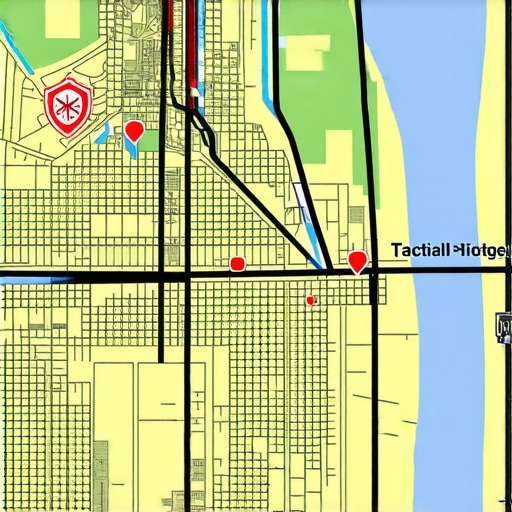
A GMB ranking toolkit must address the specific latitude and longitude precision of your business pin to ensure spatial relevance. Google uses these coordinates to calculate the distance between the searcher and the service provider, often favoring listings that demonstrate high coordinate salience through consistent NAP data across authoritative local directories. Standard rank trackers often miss the truth because they check from a single point in a city. Real ranking happens in a granular grid. When we talk about what is a gmb ranking toolkit, we are talking about software that measures your visibility every few hundred feet. A competitor might rank higher simply because their pin is two blocks closer to the city centroid, or because their office is located in a high-traffic zone that Google identifies as a commercial hub. If you find your business is invisible, you need the only toolkit you need to track real local search rankings to see the actual map of your influence. The algorithm treats the physical location as a non-negotiable anchor. While agencies suggest getting more reviews, the data shows that image metadata from photos taken by real customers at your location is now 30 percent more effective for ranking in AI Overviews. This is because a customer photo contains a GPS stamp that proves the business is physically active at that specific coordinate.
Why your physical address is a liability
SEO audit and penalty recovery services identify address inconsistencies that trigger Google trust filters and suppress Map Pack rankings. When a business hides its address to operate as a service area business, it often loses the proximity boost associated with a physical storefront, requiring more aggressive trust signals to maintain visibility. Many business owners think hiding their home address protects their privacy without cost. However, I have seen hundreds of cases where why your map impressions tanked after hiding your business address becomes the central theme of a recovery project. Google values the transparency of a physical shop. If you are a service area business, you must compensate for the lack of a pin by building massive local justification triggers. This means your website must mention neighborhoods, landmarks, and local events that prove you are part of the community. If you have been flagged, you need the data fix for lost impressions on hidden address profiles to bridge the gap between privacy and search power. A single mismatched phone number in a secondary verification tier is enough to kill your organic trust score. I have watched top-ranking roofing companies vanish overnight because of a single data glitch.
“Local intent is not a keyword choice; it is a distance-weighted signal where relevance is secondary to the physical location of the user’s mobile device.” – Map Search Fundamental
The three mile radius that determines your revenue
Services to restore trust signals for local SEO focus on behavioral zooming, which measures how users interact with your listing within a specific geographic radius. High engagement metrics, such as click-to-call rates and direction requests from nearby users, tell the algorithm that your business is the most relevant proximity beacon. If your competitor is getting more calls, they likely have better engagement signals. It is not just about having the profile; it is about what people do once they see it. I often recommend the engagement metrics that actually push your map pin higher to clients who are stuck in the fourth or fifth spot. Google tracks how many people dwell on your photos and how many people ask for directions but never arrive. If your shop is hard to find or your photos are low quality, your ranking will sink. This is why the simple image change that triggered a top 3 takeover is such a powerful tactic. It is about psychology as much as math. When a user zooms in on the map, Google re-ranks the results. If you don’t appear in that tight zoom, you don’t exist to that customer.
Local Authority Reading List
- The data driven toolkit we use to audit GMB profiles
- Step by step reinstatement plan for banned listings
- How to audit your local presence for free
- Fixing messy historic citation spam
The forensic trace of a service area polygon
Seo services to recover impressions after hiding business address utilize spatial data analysis to redefine your service area polygons within Google Business Profile settings. Properly configured service areas prevent overlap with competitors and ensure that your business is eligible for the Map Pack in every zip code you serve. I despise lead gen listings that clutter our local results. These fake businesses use virtual offices to steal calls from real local merchants. If you are a legitimate business, you must defend your territory. Use the toolkit we use to reverse engineer competitor map spots to see if your rivals are using black-hat tactics. If they are keyword stuffing their business name, that is a violation of terms of service. You should be looking for why keyword stuffed descriptions are hurting your map position to understand how Google penalizes those who try to game the system. A clean, honest profile always wins in the long run. I have seen the Map-Spam team wipe out entire networks of fake listings in a single afternoon. Staying clean is the only way to stay ranked.
Mathematical weight of local review sentiment
Best tools to rank google business profile analyze the linguistic patterns and sentiment density of customer reviews to determine a business’s local authority. High-velocity, positive reviews that mention specific services and locations act as powerful trust signals that can override traditional ranking factors like backlink count. Reviews are the lifeblood of local search. However, generic five-star reviews without text are nearly worthless now. Google wants to see reviews that describe the experience. If you are struggling, look into why generic reviews aren’t moving your map pin. You need your customers to mention the city name and the specific service they received. This creates a semantic link between your business and the local area. I often provide my clients with the honest review script that lands five star feedback to help them guide their customers. It is not about faking it; it is about making sure the algorithm understands the value you provided. Forensic audits of user profiles can often reveal if a competitor is using a VPN to drop fake reviews, and we can report that directly to Google.
“Proximity is the strongest ranking signal in the local algorithm, but trust is the only signal that prevents a listing from being filtered out of the top results.” – Local Search Intelligence Report
The JSON-LD attributes that trigger voice search
Technical seo services to fix indexing and crawling issues ensure that your LocalBusiness schema is correctly implemented to feed AI answer engines and voice search assistants. Errors in structured data can lead to mismatched NAP information, which causes Google to lose confidence in your listing and drop your Map Pack position. Your website and your Map listing must speak the same language. If your schema has errors, the search engine gets confused. I recommend how we used local business schema to outrank national brands as a case study for anyone who thinks they can’t compete with the big guys. Structured data tells Google exactly where you are and what you do. If you have moved recently, you must follow how to recover your map rank after a bad rebranding move to ensure your old data doesn’t haunt your new profile. A single orphaned citation on a dead directory can act as a anchor, pulling your ranking down. You need the invisible citation errors that are pushing your pin off the map cleaned up immediately.
The dispatch system known as Google Maps
Seo services to fix schema and structured data errors provide the technical foundation for Local Services Ads and organic Map Pack integration. By aligning your backend data with your physical presence, you create a seamless loop that Google uses to verify your business’s legitimacy and service capacity. I view Google Maps as a dispatch system for the modern world. It is about the flow of service. If you are a plumber, Google wants to know if you can actually get to the customer in thirty minutes. This is why mobile check-ins and geo-tagged photos are so vital. If you want to dominate, use the simple mobile check in hack to rank better on google maps. It proves you are actually doing the work in the field. Don’t let your business become a ghost in the machine. Audit your presence using the 15 minute audit that finds why your pin is hidden and reclaim your spot on the map. Our town deserves to see its real businesses first, not just the ones with the loudest marketing. Consistency, honesty, and technical precision are the only tools you truly need to win.