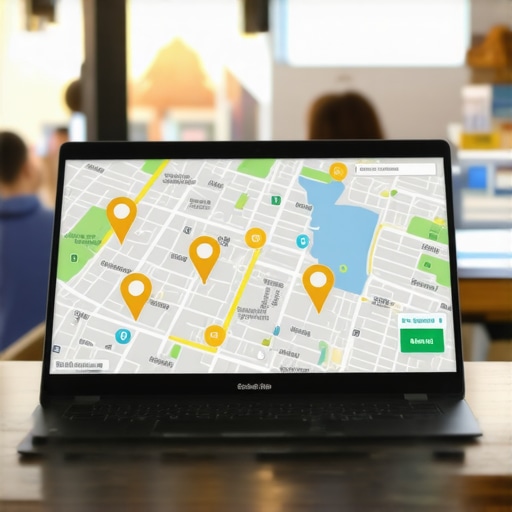
Tracking GMB Rank Without Getting Your Agency IP Banned
Tracking GMB rank safely requires isolating automated scrapers from your agency network and simulating localized GPS queries without triggering bot filters. Sophisticated search engines monitor automated traffic patterns closely, meaning bulk coordinate scraping from a single office address will eventually burn your local access. Real proximity tracking demands localized APIs, residential proxies, and clean verification protocols.
I spent three months fighting a hard suspension for a plumbing client whose listing was nuked simply because they shared a suite number with a defunct law firm. Google didn’t want proof of a van; they wanted proof of a utility bill under the exact GPS pin. That brutal experience taught me that Google treats physical coordinates like absolute truth, and they treat tracking software like a digital threat if not executed with extreme care. When you scale GMB rank monitoring for fifty or one hundred locations, the system registers your repeated, high-frequency localized searches as a coordinated scraper attack. Your agency IP gets flagged, your rank results become artificially skewed, and your clients eventually disappear from the local Map Pack because your own research tools triggered algorithmic suspicion.
“Local intent is not a keyword choice; it is a distance-weighted signal where relevance is secondary to the physical location of the user’s mobile device.” – Map Search Fundamental
The mechanical reality of regional grid tracking
To track search positions accurately you must query from exact latitude and longitude points using micro-proxies that mimic local devices. Standard search engine tracking tools that check search terms globally do not reveal the ground truth because proximity changes on a block-by-block level. A real customer standing two hundred yards from a storefront sees a completely different set of local results than someone looking from the opposite side of the highway.
To map this correctly, your systems need to pass exact coordinates through the search parameters, specifically the uule parameter, which encodes the location of the searcher down to the neighborhood. If your rank tracker does not utilize this level of spatial precision, it is essentially guessing. This is why agencies rely heavily on specialized local engines rather than general SEO platforms. If you are trying to understand why your client dropped, you should consult the checklist on fixing your ranking drop a checklist for local seo success to evaluate if your tracking methods are polluting your ranking signal.
When we look at the telemetry of a modern search engine, we see that it analyzes the behavioral signals of the tracking bot itself. If a device queries the exact same keyword twenty times in four seconds from different parts of a city while maintaining the same browser fingerprint, the engine flags the query. To circumvent this, top agencies utilize residential IP blocks that rotate naturally. Without this precaution, you risk having your tools return false positives, or worse, getting your agency IP permanently banned from scraping search result pages altogether.
The danger of automated map audits on shared servers
Automated audits run on cheap virtual private servers will eventually trigger automated defenses that invalidate your client performance reporting. Hundreds of agencies use the same public hosting spaces to run their custom API scripts, creating a glowing beacon of bot activity that search engineers actively neutralize. When your scraper shares a subnet with spammy scrapers, your tracking data becomes highly unreliable and corrupted by captchas.
This is where standard, bulk SEO tools fail to capture the nuances of hyper-local rankings. If you want to know more about this structural failure, read about why standard seo tools fail at local map audit tasks to understand the engineering gap. When these scrapers hit Google Business Profile endpoints repeatedly, they do not just lose access to the rankings; they sometimes draw unwanted editorial review to the very accounts they are tracking. An account associated with an agency profile that is constantly flagged for malicious activity is marked as high-risk, which can lead to sudden, inexplicable manual reviews for every listing in the dashboard.
If you are serious about protecting your agency reputation while gathering clean datasets, you must separate your tracking tools from your daily management environment. Never run automated ranking scripts from the same browser profiles, Google accounts, or network connections that you use to access your clients’ Google Business Profile dashboards. Keep your rank-tracking ecosystem completely sandboxed to prevent algorithmic associations from damaging your real-world clients.
Local Authority Reading List
- For an overview of essential tracking applications, read about the toolkit every local business needs to dominate the 3 pack.
- To choose specialized options for your agency, review comparing gmb ranking toolkits for high competition markets.
- If your business has lost visibility online, check out recovering visibility after a google maps ranking crash.
- To understand why you need specialized platforms, check out why your agency needs a specific toolkit for gmb ranking audits.
- To protect your business listings from negative competitor actions, read about how to protect your local rankings from competitor spam attacks.
How to recover from proximity penalties and category mistakes
Reclaiming visibility after making changes to your business categories requires auditing your structural citations and aligning your primary service tags. Many businesses face a sudden drop in map rankings when they attempt to target too many primary services or switch categories too rapidly. This sudden shifts flags the algorithmic filter designed to catch high-volume lead generation networks manipulating address footprints.
If your profile has collapsed due to an incorrect classification setup, it is vital to apply targeted professional strategies. Utilizing finding the high volume gmb categories most business owners miss can help you align your listing with the specific search terms that hold high volume without triggering suspicious spam filters. The machine looks for consistency across your local landing page, your structured citations, and your category choices. If they mismatch, your visibility drops instantly.
For businesses struggling to regain their footprint after a major ranking shift, specific interventions are required. You can employ seo services to recover gmb visibility after category change to align your business details back into Google’s good graces. The recovery process involves matching every single scrap of NAP data across your directory profile network, ensuring no traces of your old categories remain to confuse the entity resolution engine.
The cost of historical citation pollution
Cleaning up legacy directory spam is a structural necessity because outdated name and address variations degrade your real-time ranking authority. Years of cheap citation blasts on low-quality platforms leave behind a toxic trail of inconsistent data points that confuse search crawlers. A single incorrect phone number or a legacy address from five years ago can act as an anchor, holding your business back from entering the local 3-pack.
To fix this, you must systematically audit every major aggregator and directory, manual submission by manual submission. If you are looking to fix a damaged reputation caused by historical spam, you should look into seo services for cleaning historic citation spam campaigns to map out every single bad link and citation. This dirty, back-breaking cleanup work is what actually moves the needle when your proximity radius seems to have shrunk to a few hundred yards.
For those who prefer a structural, step-by-step approach to cleaning this up themselves, there are proven methods to restore consistency. You can follow a step by step way to fix historic citation spam campaigns to purge bad citation databases and rebuild a solid foundation of local NAP data that search engines can actually trust.
Dealing with competitor spam attacks and review drops
Identifying and reporting competitor listing networks that violate Terms of Service will reclaim your organic share of the local map pack. Many local spaces are flooded with fake storefronts, rented mailboxes, and keyword-stuffed titles designed to steal clicks from legitimate physical merchants. You cannot compete with these entities purely through standard SEO; you must actively clean the map of fraudulent competitors.
When a competitor launches a negative review campaign using coordinated accounts on a VPN, your immediate action must be analytical. You can employ seo services to detect and fight competitor gmb spam attacks to construct a forensic appeal that proves the malicious patterns to Google’s abuse department. This involves pulling the profile IDs, mapping the review velocity, and pointing out the geographic inconsistencies in their reviewer networks.
If your own listing is currently struggling with suspension issues due to aggressive optimization or spam flags, do not panic. Using seo services to recover from gmb suspension will guide you through the process of compiling the exact real-world documents, utility bills, and tax certificates that Google requires to reinstate your digital asset and get your phone ringing again.
Rebuilding consumer trust through operating hour alignment
Inconsistent business hours listed across multiple directories destroy consumer trust and signal low operational quality to search engines. If your Google Business Profile says you are open at 8:00 AM, but your Yelp listing or your website says you open at 9:00 AM, Google’s algorithm flags the discrepancy to avoid sending searchers to a locked door. This operational friction results in a direct demotion in local search visibility.
If your digital footprint is messy, you must act quickly to synchronize these indicators. Utilizing seo services to fix gmb profile with inconsistent opening hours history is the fastest way to trace old online profiles and force your hours of operation into perfect alignment. When your digital hours match your physical operational reality, search engines feel confident recommending your business to active searchers.
To accelerate this synchronization, you should also leverage specialized auditing tools. Using top google business profile seo toolkits will help you sweep the web for hidden, auto-generated business profiles that might be displaying outdated operational data. Keeping these listings clean ensures your business pin remains highly visible and stable in the local Map Pack.
Solving legacy lead generation pollution
Restoring trust after running a gray-hat lead generation listing requires a complete purge of rented locations and a transition to real-world assets. Many businesses buy cheap leads from agencies that set up artificial GMB pins across a metropolitan area. When Google runs its periodic spam sweeps, these networks get wiped out, leaving your primary brand associated with suspended entities.
Transitioning from fake profiles to a real, compliant presence requires professional intervention. Applying seo services to rebuild trust after spammy lead gen listings can help you distance your legitimate business from bad legacy networks and build clean local authority. This transition ensures your physical location becomes your primary source of brand equity, keeping you safe from sudden algorithmic updates.
If you have incorrect or outdated business information floating around the internet from these legacy campaigns, you must clean up those properties as well. Applying seo services to fix incorrect business information online can trace down old phone redirect numbers, fake suite numbers, and mismatched brand names. This leaves behind a squeaky-clean digital footprint that search engine algorithms will confidently display at the top of the local search results.
“Consistency across external directories is no longer just about building citations; it is about verifying the physical existence of an entity to reduce search engine liability.” – Local Entity Resolution Whitepaper
Understanding the math behind local search tools
Using local search software without understanding how they fetch search engine results pages can cause you to make critical strategy mistakes. Some ranking tools query the API directly while others scrape the raw HTML of search results. These two methods return completely different results because the API bypasses personalization and behavioral search histories that real-world users experience.
If you are looking to acquire tools to manage this process, it is critical to select high-utility software. You can search to buy local seo tools for gmb that use actual residential IPs to simulate realistic human queries. This investment ensures that your data matches what users are actually seeing on their mobile devices as they navigate through the city.
To understand the mechanics of how these platforms function, look closely at their query methodologies. Reading on how gmb ranking toolkits work for local seo will help you understand the difference between API-based checking and browser-level emulation. Armed with this knowledge, you can build a highly accurate, risk-free tracking system that helps you grow your client’s business without getting your agency IP blacklisted by search engines.