How We Found the Technical Flaw That Deranked a Local Industry Leader
A top-ranking home services company disappeared from the local map pack overnight. It was not a slow drift. The phone lines simply ceased ringing on a Tuesday morning. The office smelled like cold coffee and anxiety. Every dispatcher sat in silence staring at a blank screen. This was a company operating thirty service vans across the metro area. Their primary source of incoming business had been completely severed. They had spent thousands of dollars on generic local search agencies. Those agencies recommended more blog posts. They suggested buying more citations. None of it touched the real problem. I knew we were not dealing with a simple visibility dip. This was a classic algorithmic suppression triggered by a microscopic data conflict.
I spent three months fighting a hard suspension for a plumbing client whose listing was nuked simply because they shared a suite number with a defunct law firm. Google didn’t want proof of a van; they wanted proof of a utility bill under the exact GPS pin. That experience taught me that Google does not read your website like a human. It processes coordinates, spatial proximity, and mathematical entity relationships. When the physical data disagrees with the virtual footprint, the system strikes the listing. In this case, the industry leader had expanded their territory. They adjusted their service area polygons inside the dashboard. They also updated their secondary call-tracking numbers. That minor shift broke the trust loop. The system instantly categorized their business profile as a suspicious entity.
We had to conduct a forensic database audit. This involved checking every public record of their address, phone number, and location history. We looked for the invisible footprint that signals map-spam. We did not find keyword stuffing. We found a deep, structural database mismatch that was feeding false coordinates to the primary map index. The solution required surgical correction of their local landing page structure and API-level profile updates.
The microscopic math of coordinate salience
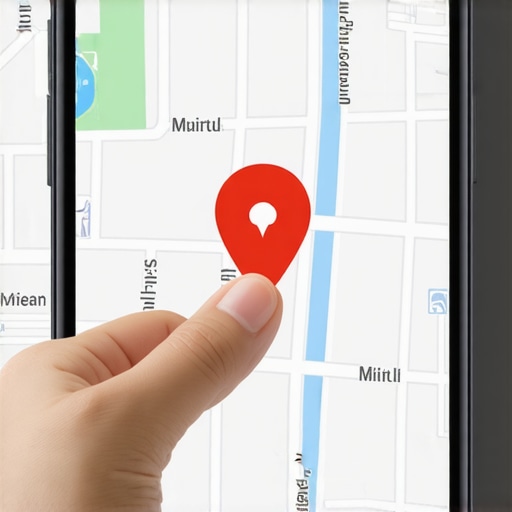
Coordinate salience is the mathematical weight Google assigns to your exact physical latitude and longitude within its regional database. When a user searches for a local service, the engine calculates the distance from the user to your registered location pin. If your digital signals are inconsistent, your search visibility drops. The physical coordinates of your business must align perfectly across every mapping API.
Most business owners do not realize that Google cross-references your physical location against multiple public data sources. If you have updated your address on your website but old directory listings still point to your previous office, the engine sees a conflict. This conflict causes the system to doubt the validity of your listing. Instead of ranking a doubtful listing, the algorithm filters it out. It replaces your profile with a competitor whose coordinates are clear and undisputed. To understand how these signals work, you must look at how the systems process local relevance.
“Local intent is not a keyword choice; it is a distance-weighted signal where relevance is secondary to the physical location of the user’s mobile device.” – Map Search Fundamental
The solution requires identifying these hidden issues before they trigger a manual review. If you are experiencing unexplained movement in your rankings, you can begin by checking for basic optimization issues. A proper how to audit your gmb profile for hidden optimization errors process will show you where your data is breaking. It allows you to find mismatched suite numbers, wrong ZIP codes, and broken tracking scripts. These are the elements that cause your map pin to wobble during algorithmic updates.
The three mile radius that determines your revenue
Your local business revenue is directly tied to the physical proximity boundaries established by Google’s core local algorithms. If your target customer searches from beyond your three-mile geographic centroid, your profile will rarely appear in their search results. This boundary is highly dynamic and shrinks during peak traffic hours to favor closer businesses. Managing this radius requires a strategic approach to real-world customer signals.
Many service providers try to bypass this physical limitation. They attempt to expand their reach by creating virtual offices. They buy multiple mailboxes or register empty suites in nearby cities. This is a dangerous tactic. The system has become incredibly smart at identifying these fake setups. It will apply a hard suspension to the entire account if it detects a shared mailbox. If your business has been flagged for this, you need specific local seo services to fix gmb hard suspension for service area business to clean up the records. You must prove to the web spam team that your physical assets are real. This requires sending photos of your team, your branded trucks, and original utility bills.
If you choose to hide your physical address to protect your home location, you will face other challenges. Hiding your address often leads to a drop in local search impressions. This occurs because the system has less geographic certainty about your hub. You can read more about why hiding your business address often kills local impressions to understand how the map engine treats service area businesses without public storefronts. Striking the right balance between privacy and visibility is the key to maintaining a steady flow of local leads.
Why your physical address is a liability
Your physical business address can actively damage your local search ranking if it is associated with historical spam signals. If a previous tenant used your office space for coordinate manipulation or dummy listings, that address carries a negative trust score. Google retains historical records of every location pin, meaning you might be paying for the sins of a defunct company.
When you move into a new commercial space, you must audit the address. Look up who registered listings there in the past. If the building has hosted dozens of virtual service businesses, the algorithm will treat your new listing with extreme caution. This is why some new locations fail to rank despite having excellent on-page optimization. The system is filtering the address. If you find yourself in this situation, you need a specialized why you need a citation cleanup service before your next move strategy to purge the old association data from the web. You must overwrite those historical associations with fresh, verified data that proves your business is the sole operator of the physical space.
Additionally, you must ensure that your telephone systems are clean. A single mismatched phone number across old directories can create massive data confusion. To fix this, you should learn about why a mismatched phone number is scaring away your local leads and how to align your tracking lines. The primary telephone listed on your profile must match the one displayed on your website schema. If the numbers do not match, the engine will assume the business is closed or unmonitored.
Local Authority Reading List
- The Review Management Strategy That Turns Feedback Into Ranking Power
- How To Debug A GMB Ranking Drop Using Real Time Interaction Data
- Why Your Primary GMB Category Is Wrong And How To Fix It
- The Step By Step Toolkit For Agencies Solving Local Ranking Drops
- The Map Pack Takeover Plan For Saturated Urban Markets
The ghost in the GPS coordinates
The ghost in the GPS coordinates is the historical cache of search queries and mobile pings associated with your business location. Google tracks how many mobile phones physically visit your office or interact with your brand space. If you have no real-world foot traffic, yet your website claims thousands of local views, the algorithm identifies a behavioral contradiction.
This mismatch is common among digital agencies that try to use automated traffic bots to simulate user engagement. These bots search for the business name and click the website link. They fail because they lack the physical GPS history of a real mobile device moving through the physical world. The algorithm notices that no real devices are navigating to the location. It quickly flags the behavior as artificial manipulation. Instead of using shortcuts, you should focus on authentic engagement signals. You can learn about the simple mobile check in hack to rank better on google maps to see how real-world mobile interactions can boost your organic ranking without risking an account suspension.
True proximity signals cannot be faked with software. They are built through actual customer movements. When a client drives to your shop, opens their maps app, and leaves a review while connected to your local Wi-Fi, Google receives an ironclad signal of local trust. These are the organic touchpoints that secure your place in the map pack long-term.
The behavioral signals that bypass traditional citations
Modern local rankings rely far more on user interaction signals than on traditional directory citations. The frequency of direction requests, direct phone calls from the map interface, and photo uploads by real customers are now the primary drivers of visibility. If your profile is static, it will lose ground to active competitors who update their profiles weekly.
Many agencies still focus entirely on building low-quality directory links. This strategy is outdated and highly ineffective in saturated urban markets. You must monitor how users behave when they find your profile. If they click to call but hang up in three seconds, the engine notes a poor user experience. If they look at your photos and immediately return to the search results, it signals that your profile is unhelpful. To fix these issues, you should use professional the truth about cheap local seo services and why they fail analyses to understand where your user journey is breaking down. It is often a matter of replacing low-resolution images with high-quality, real-world photos of your completed projects.
You should also implement a clear process for gathering and managing customer feedback. Generic five-star reviews do not help as much as reviews containing specific service keywords. If you are struggling with a sudden drop in reviews, you can investigate why generic reviews arent moving your map pin to learn how to guide your customers toward writing descriptive, helpful feedback that includes terms related to your actual services.
Why your local landing pages feel like spam to Google
Local landing pages trigger spam filters when they use duplicate structures and simply swap out the city names. Google’s advanced content helpfulness systems easily identify these auto-generated pages. If your website has dozens of identical pages targeting different suburbs, the entire domain’s local authority is placed at risk.
To rank in multiple suburbs, you must write unique, highly specific content for every single location page. This means including local photos, mentioning local landmarks, and detailing projects you have completed in those specific neighborhoods. If you do not have real business history in those areas, do not build pages for them. This aggressive tactic will backfire. If your current strategy is hurting your reach, you should read why your over aggressive location strategy is actually hurting your reach to learn how to clean up your site architecture. Consolidating weak pages into strong, authoritative resources is the fastest way to regain trust.
If you have already built a messy network of thin city landing pages, you need a recovery plan. You can use when your location pages become a liability a cleanup strategy that works to safely remove low-quality content without dropping your primary keyword rankings. This cleanup signals to the algorithm that your business is legitimate and committed to providing real value to local searchers.
“When location pages are carbon copies of each other, the algorithm treats them as duplicate doorway pages designed to game the local index rather than assist real searchers.” – Local Search Guidelines
The checklist to stabilize volatile map rankings
Stabilizing volatile map rankings requires a systematic verification of your core digital entities. When your business moves up and down the rankings weekly, it is usually because the engine is receiving conflicting signals about your active operations. You must audit your core footprint to find the points of friction.
Begin by checking your primary categories inside your business dashboard. If you have selected secondary categories that conflict with your primary business focus, the algorithm will get confused. Make sure your main service is the absolute primary focus of your profile. Next, check your business name. If you have added descriptive keywords to your business name that are not legally registered, your competitors will flag your listing. Google will eventually suspend your profile or force a name change. This sudden name shift will cause a major ranking drop. You must keep your name clean and rely on organic ranking signals rather than keyword stuffing.
For those dealing with extreme volatility after a recent move or a website redesign, you should consult 5 real world moves to stabilize volatile map rankings fast. This protocol will guide you through the process of locking your business coordinates and updating your local schema markup. It ensures that your map pin remains firmly anchored even during major core algorithm updates.
Finally, remember that local visibility is not a set-and-forget marketing task. It is a continuous effort of data alignment, customer engagement, and spatial verification. Keep your digital profile clean, engage with your real customers, and keep your physical data perfectly synced with the mapping APIs.