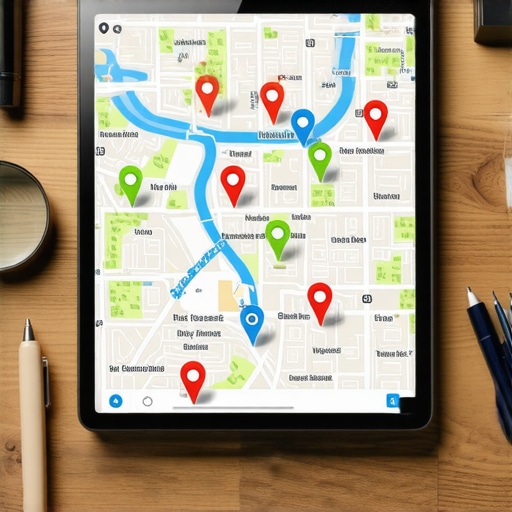
How to Escape the Duplicated Location Filter That is Hiding Your Business
I spent three months fighting a hard suspension for a plumbing client whose listing was nuked simply because they shared a suite number with a defunct law firm. Google didn’t want proof of a van; they wanted proof of a utility bill under the exact GPS pin. The local database is a ruthless machine of precision. When two listings occupy the same physical coordinates or leverage overlapping geographical markers, Google does not try to understand the nuance of your different businesses. It simply hides one. This spatial filtering has quietly destroyed the phone volume of countless service businesses and brick-and-mortar storefronts that have no idea they are being actively filtered out of existence.
The shadow cast by overlapping spatial coordinates
The duplicated location filter hides your business by comparing GPS latitude and longitude coordinates alongside business categories to resolve spatial redundancy in search results. This automatic filtering triggers when Google determines that two profiles at the same address offer similar services. To survive, you must establish an independent spatial footprint using unique categories, structured schema, and verifiable physical separation. This requires going beyond basic naming conventions to isolate your business entity inside the localized indexing pipeline.
For years, agencies sold the dream of virtual offices and shared spaces. Today, those strategies have become ranking anchors. When your business resides in a commercial building with several other enterprises, the local search algorithm runs a real-time consolidation query. It decides which listing holds the highest authority for that primary category at that exact centroid, then filters the others out of the visible 3-pack. The filtered listings do not disappear from the index entirely, but they are pushed into a secondary, invisible layer that only appears when a user zooms in micro-miles closer to the building itself.
This is not a manual penalty. It is an automated de-duplication loop designed to keep the Map Pack clean. If you are sharing a suite with another local business, or if you have set up multiple entities in the same industry under one roof, you are actively feeding this filter. To break free, you must audit your digital presence down to the physical layout of your office, the structured data on your landing pages, and the historical records of your location. You must understand that local search engines prioritize clarity over complexity every single time.
The math behind centroid theory and coordinate proximity
The local index does not think in streets; it thinks in coordinate grids. Every device querying Google Maps transmits a precise GPS point, and the system matches that point against the known coordinates of registered businesses. The distance-weighted signal of proximity is incredibly sensitive. If your competitors are leveraging highly optimized, clean listings while your profile is trapped in a duplication loop, your visibility drops to zero the moment a searcher steps outside your immediate block.
“Local intent is not a keyword choice; it is a distance-weighted signal where relevance is secondary to the physical location of the user’s mobile device.” – Map Search Fundamentals
We see this proximity crunch affect businesses that attempt to rank across wide urban zones without physical infrastructure. If you have been getting your map impressions back after hiding your location, you already know how difficult it is to maintain reach when you lack a physical street address. Google calculates your local trust score based on the stability of your business pin. When that pin is mathematically stacked on top of another profile that shares your primary service categories, the algorithm triggers a filter to prevent the map from looking cluttered.
This spatial filtering also occurs heavily in service area business profiles. Many contractors believe that by hiding their address, they can create dozens of overlapping profiles across different suburbs. This over-aggressive expansion of service areas triggers immediate duplication filters. Google checks the underlying registration addresses behind those hidden profiles. If they trace back to the same residential street or a cluster of close friend-and-family homes, the system filters all but the oldest, most authoritative listing. You must learn handling multiple businesses at the same address without triggering filters if you want to run clean, separate operations without risking a sweeping algorithmic wipeout.
How to run a localized forensic audit of your profile data
You cannot fix a filtered listing until you know exactly what is triggering the duplication engine. This requires a systematic audit of your business data against your nearest competitors. Many business owners assume their sudden drop in map rankings is due to a standard algorithm update, when in reality, they have been grouped with a nearby competitor sharing a similar name or category. You can read more about why your gmb audit is failing to find the real ranking killers to understand the hidden technical triggers that common automated SEO tools completely overlook.
To start your audit, perform a hyper-local search while standing directly at your business location. If your competitor appears in the 3-pack but your business only appears when you zoom in until the map scale reads fifty feet, you are actively filtered. Next, audit your primary category. Many businesses choose a generic main category that pits them directly against massive authority sites in the same building. If you are a specialized technician, do not list your business as a general contractor if there is already a major building firm downstairs. We have written a comprehensive guide on why your primary gmb category is wrong and how to fix it to help you navigate this exact structural decision.
Your audit must also look at your web infrastructure. Broken redirects, internal link loops, and messy site structures can degrade your entity authority, making your profile more susceptible to being filtered. If your website is dropping authority signals, your map listing will suffer. You can learn about how 404 pages destroy your local customer experience and rankings to see how website health directly correlates with local map pack stability.
The clean citation strategy for separating close entities
Citations are the bedrock of local validation, but messy duplicate records will lock you into the filter forever. If your business has undergone a name change, a move, or a structural reorganization, there is likely a trail of contradictory NAP data scattered across the web. This historic citation spam acts as a constant signal of untrustworthiness to Google’s indexing spider. To clean this up, you must locate every old directory profile and force a hard correction of your name, address, and phone number.
This process of data scrubbing is tedious but mandatory. For those struggling with messy historical campaigns, we recommend reading about a step-by-step way to fix historic citation spam campaigns. When you standardize your data across the primary aggregators, you signal to Google that your business is a distinct entity with its own dedicated infrastructure. This is especially vital when trying to distinguish your listing from another business located in the same office complex.
Furthermore, avoid using cheap automated services that promise to blast thousands of new listings across low-tier directories. These services generate vast amounts of machine-made spam that can trigger quality filters on your main site. Instead, focus on high-authority local profiles that require manual verification. Understanding why clean citations still matter in a world of ai junk will help you prioritize high-quality directory cleaning over volume-based spam tactics.
Local Authority Reading List
- Identify your true tracking blocks: Tracking GMB rank without getting your agency IP banned
- Resolve deep physical duplications: Getting out of the duplicate profile trap once and for all
- How to escape the filtered state: How to break your profile out of the gmb duplicate location filter
- Recovering your lost phone calls: The step-by-step audit to find why your map calls stopped
- The primary local lead toolkit: The map ranking toolkit we built for high volume service leads
De-duplicating your website architecture and location pages
Your website content plays an incredibly active role in how Google groups your physical locations. If you are using an over-aggressive location page strategy, you might be creating identical landing pages where only the city name has been swapped out. Google’s modern helpful content system recognizes this pattern instantly and will group those pages as duplicates, which in turn causes the local map profiles tied to those pages to be filtered or suppressed.
To fix this, you must prune your location page hierarchy. If you have too many localized landing pages targeting small, adjacent neighborhoods with identical text, you are actively triggering algorithmic red flags. You should study our detailed guide on why having too many location pages is triggers google spam filters to learn how to clean up your site structure. Each page must offer distinct, hyper-local proof of work, including unique project photos, real customer reviews from that specific zip code, and detailed neighborhood-level directions.
If you find that your map rankings drop every time you make a minor update to your website, you are likely dealing with a brittle entity connection. When the connection between your Google Business Profile and your website is fragile, even small changes to your homepage can cause your map pin to fluctuate wildly in local search results. You can find the solution in our resource on the fix for brittle map rankings that drop every time you update to build a stable, long-term local foundation.
How to defend your map presence against competitor spam attacks
In highly competitive local niches, competitors will often try to force your business into a duplication filter or get your listing suspended by suggesting fake edits. They may change your street address to match another nearby business, suggest your business is “permanently closed,” or report your legitimate listing as a duplicate of a defunct profile. To survive, you must actively monitor your profile and deploy a defensive strategy against these coordinated spam campaigns.
If you have recently noticed a sudden, unexplained drop in your map rankings, you may already be under attack. We have mapped out a recovery plan in recovering visibility after a google maps ranking crash to help you identify if malicious competitor edits are the root cause. You must also leverage specialized toolkits designed to scan for competitor spam patterns and report them to Google’s map-spam team. Learn more about how to protect your local rankings from competitor spam attacks to keep your profile secure.
Many business owners buy standard, generic SEO tools hoping they will resolve these highly complex, spatial issues. However, traditional tools are blind to proximity variations and local spam networks. To protect your market share, you need tools engineered specifically for Google Business Profile audits. We discuss the limits of generic platforms in our analysis of why standard seo tools fail at local map audit tasks, showing you why a specialized local toolkit is mandatory for long-term survival in saturated urban spaces.
Reclaiming your local visibility after a sudden algorithm shift
When Google updates its local search algorithm, the proximity and duplication filters are often tuned to be far more aggressive. A profile that ranked consistently for years can find itself suddenly pushed out of the 3-pack overnight because the threshold for entity verification was raised. If you find yourself in this situation, do not panic and start changing all your profile details at once. This erratic behavior will only trigger a hard suspension.
Instead, follow a structured recovery checklist. This includes verifying your core NAP data, auditing your recent link acquisition, and cleaning up any low-quality content that may have triggered a algorithmic penalty. If you are currently dealing with a sudden drop, look through our checklist for fixing your ranking drop a checklist for local seo success. By methodically identifying the weak signals in your profile, you can systematically rebuild your authority and break out of any newly applied algorithmic filters.
Finally, focus on building high-quality, local backlinks that prove your physical connection to your city. Avoid directory blasts and automated link schemes, which will only degrade your organic trust score. For a clean, sustainable link strategy, consult the clean backlink blueprint for saturated local markets to secure your spot at the top of the map pack for years to come.