Why Google Does Not Trust Your Business Address and How to Fix It
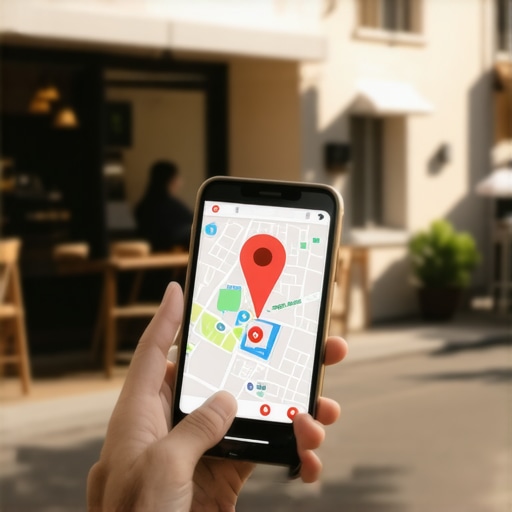
The street smells like wet concrete and diesel exhaust on a gray Tuesday morning. I am staring at a physical storefront in Chicago with a camera strapped to my wrist, watching a glitch in the local database manifest in real time. The sign on the glass says one thing, but the digital signal transmitted to the mapping servers tells an entirely different, messy story. For twenty years I have tracked the physical footprints of businesses across mapping databases, hunting down the invisible discrepancies that cause high-value listings to disappear from search results without warning. I do not look at a Google Business Profile as a social media page. It is a spatial transmission node. If your coordinates are slightly off, or if your lease agreement looks like a virtual office on a spam filter, the system will discard your presence to protect its users.
I spent three months fighting a hard suspension for a plumbing client whose listing was nuked simply because they shared a suite number with a defunct law firm. Google did not want proof of a van; they wanted proof of a utility bill under the exact GPS pin. That specific battle showed me how little the algorithm cares about your marketing copy. It cares about real-world validation, physical utility, and structural consistency. When you run a business, you assume that typing your street number into a form is enough to secure your territory. In the physical database ecosystem, that address is a hypothesis that Google is actively trying to disprove. To survive, you must understand how Google verifies physical proximity and how to build an unshakeable digital anchor.
“Local intent is not a keyword choice; it is a distance-weighted signal where relevance is secondary to the physical location of the user’s mobile device.” – Map Search Fundamental
The ghost in the GPS coordinates
Your physical address is treated as a highly volatile coordinate set that Google cross-references against multiple state, financial, and atmospheric databases to confirm structural legitimacy. If your spatial signature does not align with regional utility registers or government tax files, the verification algorithms flag your listing as a synthetic entity. This mismatch instantly limits your proximity reach or triggers a manual review cycle. The system monitors the physical density of businesses sharing your exact coordinates. If you register your plumbing shop in a building that has historically hosted hundreds of short-lived corporations, your ranking drops before you even start optimizing your profile. To solve this, you need why your address inconsistencies are stopping your growth insights to realize how broken location signals freeze your business in place.
The mathematical weight of a physical location depends on what the system calls centroid alignment. When a user searches for an emergency service on their phone, the search engine calculates the distance from the nearest mobile tower, active Wi-Fi routers, and the user’s past location history. If your business claims to be located right at that central point but has zero physical footprints like foot traffic, customer photos, or localized device pings, the engine assumes you are a ghost kitchen or a virtual mailbox. This is why buying cheap local SEO tools for GMB often leads to disappointment; they optimize simple text strings instead of addressing the fundamental physical distance calculations. You cannot trick a satellite triangulation system with a keyword-stuffed landing page. You must prove your business actually operates where you claim it does.
Why your physical address is a liability
Shared office buildings, virtual suites, and unnumbered industrial yards trigger immediate automated trust penalties within the local search ecosystem. When multiple distinct entities claim the same physical footprint, the spam filters merge the entities or hide them behind a single dominant listing. This filtering process is brutal because it happens silently without any suspension notification. You simply notice your daily incoming call volume drop to zero over a weekend. If you are operating a genuine service business from a complex shared space, you must utilize specialized services to fix mismatched business address and phone number listings across the primary data aggregators. This aligns your suite numbers, phone codes, and official business registry filings to remove any digital ambiguity.
The system evaluates the physical reality of your storefront using Street View imagery, public postal registries, and spatial zoning maps. If your plumbing service is registered at a residential townhouse but your category implies a heavy retail storefront, the algorithm flags the mismatch. Many owners attempt to hide their address to avoid showing their home, but why hiding your business address often kills local impressions is a lesson learned hard by thousands of contractors. When you hide your primary address, your proximity bubble contracts from a fifteen-mile radius to a tiny, hyper-local zone. This happens because the system cannot confidently measure your exact dispatch point, causing it to favor competitors with visible, verified physical structures.
Local Authority Reading List
- Find out how to clean up historical optimization errors using the step-by-step audit to find why your map calls stopped.
- Understand how to rebuild after a catastrophic ranking drop with the guide on recovering visibility after a google maps ranking crash.
- Learn how to fix your underlying technical parameters by using the the step-by-step toolkit for agencies solving local ranking drops.
- Discover the risks of aggressive localized structures with the breakdown of why your over-aggressive location strategy is actually hurting your reach.
The three mile radius that determines your revenue
Your proximity boundary is a dynamic, algorithmic barrier shaped by user density, real-time traffic speeds, and competitor profile authority. A business situated in a highly competitive urban area may only have an effective visibility radius of a few city blocks, while a suburban equivalent can project its search presence over ten miles. If your business suffers from inconsistent citation data, your visibility radius shrinks instantly to protect searchers from inaccurate recommendations. If you notice your map rankings fluctuating wildly, you should consider using local seo tools to optimize google business profile listing parameters, ensuring your primary category and location variables remain perfectly consistent across all search sessions.
Proximity is not just about physical distance; it is also about local engagement signals. When a user visits your shop and uploads an unedited photo from their phone, the image contains embedded latitude and longitude coordinates. Google reads this EXIF data to confirm that real human beings are interacting with your brand at that specific location. This is why artificial review networks and virtual locations fail; they lack the real-world mobile device pings that confirm genuine physical interactions. If your map rankings drop, utilizing professional google maps seo services for suspended profiles will help you rebuild your local authority by purging synthetic signals and replacing them with verified, real-world user interactions.
The hidden signals of category manipulation
Changing your primary business category can trigger an immediate manual suspension or completely erase your local map visibility. The local search engine associates specific category groupings with historical behavioral patterns and geographic search intents. When you change your primary classification from a general term to a highly competitive niche, the algorithm expects to see a corresponding shift in your website content, inbound local links, and customer reviews. If those supportive signals are missing, your profile is flagged for keyword manipulation. To avoid this, utilizing targeted seo services to recover gmb visibility after category change can help re-establish your profile’s legitimacy by aligning your structural schema with your new category.
Many business owners assume they can simply choose the category with the highest search volume, but this often backfires. If your website lacks matching schema markup or contains outdated business details, the algorithmic trust score collapses. A professional gmb keyword and category research toolkit can help you identify secondary categories that support your main services without triggering local search spam filters. This balanced approach ensures your listing remains active and visible, even during major algorithm updates that target over-optimized local profiles.
“When Google detects a sudden shift in a profile’s primary category without a corresponding change in the underlying website taxonomy, the listing is automatically filtered from the Map Pack.” – Vicinity Algorithmic Analysis
Fixing the underlying structural damage
Restoring trust in your business address requires a systematic cleanup of your digital footprint, starting with your website’s structured data. Mismatched address details, outdated phone numbers, and broken links on your contact pages are the primary causes of local ranking drops. To fix these issues, you must audit your entire digital presence and ensure every reference to your brand is identical. Implementing professional seo services to fix schema and structured data errors is the fastest way to align your website’s backend code with your Google Business Profile, providing a clear and consistent signal to search engine spiders.
Once your website’s technical foundation is secure, you can focus on optimizing your business profile for increased call volume. This involves updating your photos, responding to customer reviews, and answering local questions on your profile. Using a specialized how to get more calls using a proven business profile toolkit will guide you through the process of optimizing your listing for maximum user engagement, helping you convert simple map views into real customer inquiries. Remember, local search success is not about tricks; it is about building a consistent, verifiable physical presence that search engines can trust.
To maintain your rankings over the long term, you must constantly monitor your digital footprint. Using a reliable local seo toolkit for google maps ranking allows you to track your positions across different areas of your city, ensuring your physical address remains the powerful marketing asset it was meant to be. By focusing on consistency, verification, and genuine customer engagement, you can protect your local business from sudden algorithm updates and dominate your market for years to come.