Cleaning Historic Citation Spam Without Deleting Your Real Presence
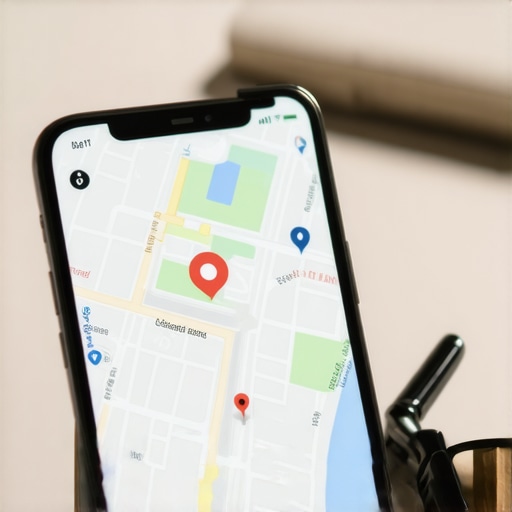
The street level truth about local search often hides in the grainy details that most agencies ignore. I smell the wet concrete of a city morning when I look at a map pack; it is a physical reality reflected in a digital mirror. Sometimes that mirror is cracked by years of bad data and reckless spam campaigns. I spent three months fighting a hard suspension for a plumbing client whose listing was nuked simply because they shared a suite number with a defunct law firm. Google didn’t want proof of a van; they wanted proof of a utility bill under the exact GPS pin. This is the microscopic math of local relevance. When a business profile carries the weight of historic citation spam, the algorithm treats the listing like a glitch in the storefront data. You cannot just delete your way out of this mess. You have to scrub the digital footprint until the authentic signal shines through the noise of old, mismatched business names and dead directories.
The ghost in the GPS coordinates
Historic citation spam and mixed language listings act as anchor weights on your Google Business Profile ranking. To fix low GMB rankings, you must identify every mismatched business address and duplicate content issue that suggests your business is a lead gen ghost rather than a verified local entity. The algorithm identifies these inconsistencies as a lack of trust. The physics of a three mile proximity radius shift depends entirely on the stability of your core data points. If one directory says you are on 5th Street and another says Suite 500 on 5th Ave, the coordinate salience collapses. This is where the impact of historic spam on your current map visibility becomes a fatal problem. You are essentially telling the map that you do not exist in a single, physical space. To the machine, if you are everywhere in the data, you are nowhere on the street.
“Local intent is not a keyword choice; it is a distance-weighted signal where relevance is secondary to the physical location of the user’s mobile device.” – Map Search Fundamental
The forensic trace of a service area polygon is often the first thing to break. When I audit a profile, I look for the subtle clicks that reveal how competitors are stealing leads through better data hygiene. Many multi location businesses suffer because their invisible citation errors are pushing their business pins off the map. This is not about building more links. This is about removing the rotting wood of old SEO campaigns that used keyword stuffed names. Every time you change your business model or rebrand, you leave a trail of digital debris. If you do not scrub your business name from low quality lead sites, the old name will continue to haunt your current ranking potential. It is a slow, manual process that requires looking at the raw data of every directory and social signal. You need to understand the simple fix for messy historic citation spam campaigns which involves aggressive reach out and direct data suppression.
Why your physical address is a liability
Soft 404 errors and mismatched phone numbers signal to Google that your local landing pages are low quality doorways. To secure top map spots, you must use a local seo toolkit that prioritizes NAP consistency and authentic customer proof over automated citation blasts. A single digit error in a phone number across five secondary directories can trigger a proximity filter that hides you from nearby customers. I have seen law firms lose fifty percent of their call volume because a secondary verification tier in their Local Services Ads detected a different phone number than their main profile. You must understand why slight address variations are costing you the local 3 pack. It is about the mathematical weight of the signal. If Google sees ten different versions of your address, it reduces your confidence score. A low confidence score means your pin stays on page two while a less qualified competitor with perfect data takes the lead.
The logistics of service area workers often get muddled when businesses try to rank in cities where they have no physical footprint. This is the danger of the penalty free way to build city landing pages for local search; if the signal is too thin, it looks like spam. You must verify every node of your presence. This includes fixing the citation errors that are pushing your pin off the map before they become permanent record. The street photographer knows that a staged photo is easy to spot. Google knows that a staged business address is even easier to detect. Using software to audit map profiles can help, but the real work is in the manual cleanup of years of bad habits. You are fighting for the trust of a machine that values consistency above all else.
Local Authority Reading List
- How to spot citation spam before it tanks your local rank
- The simple audit that cleans up years of messy business data
- The manual process for purging spammy links from local profiles
- Why your business profile category change broke your local rankings
The three mile radius that determines your revenue
Proximity filters and duplicate location filters are the primary reasons service area businesses become invisible on Google Maps. To recover from a sudden ranking drop, you must audit your local search rankings to find stealth ranking factors like hidden citation errors or toxic link profiles. Proximity is a harsh master. If you are not physically where you say you are, the map will ignore you. I have seen businesses try to hide their shop location to avoid walk ins, only to find that hiding your shop location is costing you local phone calls. The algorithm needs a physical centroid to anchor your relevance. Without it, your proximity signal is too weak to compete with local merchants who embrace their physical presence. This is why proximity filters are the enemy of service area businesses that lack a clear, verified office.
“Relevance is secondary to the physical location of the user mobile device. The grid is the only truth.” – Opossum Algorithm Research
The math of a check in signal is a powerful thing. When real customers take photos at your location, they provide GPS metadata that Google trusts more than any directory entry. This is part of how we boosted Google Business Profile impressions using only authentic customer proof. If you have been relying on cheap SEO services, you likely have a backlog of fake reviews and AI generated text that is hurting your trust score. You need to remove low quality AI text to regain trust. The street level truth is that users and algorithms both prefer the raw, unedited reality of a local business. If your profile looks like a corporate template, you will lose to the neighborly shop every time. You must also clean up a toxic link profile before Google penalizes you further. The digital street is paved with the remains of businesses that thought they could skip the verification process.
Forensic audit of the digital storefront
Cleaning up a messy business opening hours history and repairing map rank after a rebranding move requires a data driven audit strategy. You should buy a GMB ranking toolkit that focuses on user signals rather than empty reports to identify why your business vanished from the 3 pack. Mixed language listings are a common symptom of outsourced SEO where the provider used automated tools to create profiles in multiple languages, confusing the local index. You must purge these. Look at the audit tactics that find why your business vanished from the 3 pack. Often, the cause is a simple category conflict or a duplicate profile you didn’t know existed. If you have moved, you must understand how to recover your map rank after a bad rebranding move by ensuring all old citations are updated or suppressed. Leaving them active is like leaving old signage on a building you no longer occupy. It confuses the locals and the machine.
The engagement metrics that actually push your map pin higher are rooted in real human interaction. Replying to reviews in a specific way can improve your position, especially if those reviews mention specific services or locations. Check how a specific way of replying to negative reviews improves your map position. It is about the sentiment and the entities involved. If your citation history is full of spam, these authentic signals get drowned out. You need the simple fix for GMB profiles with messy opening hours history to show Google you are an active, operational business. Every detail matters. From the way you list your secondary phone number to the way you describe your service area polygon. If the data is dirty, the ranking will be low. The pin moved because the data became unreliable. To bring it back, you must be the most reliable source of information about your own business. That means purging spammy links from local profiles and ensuring your specific schema tweaks help Google understand your shops location. Only then will the map trust you enough to put you at the top of the stack.