Why Hiding Your Shop Location Is Costing You Local Phone Calls
The street smells like wet concrete and exhaust. I spent most of my morning looking at a storefront that officially does not exist. On the screen, it is a blank space; in the real world, it is a brick-and-mortar plumbing supply house with three trucks parked out front. This is the glitch I see every day. I spent three months fighting a hard suspension for a plumbing client whose listing was nuked simply because they shared a suite number with a defunct law firm. Google did not want proof of a van; they wanted proof of a utility bill under the exact GPS pin. That experience taught me that the local algorithm does not care about your brand or your intentions. It cares about spatial certainty. When you hide your address, you are effectively telling the algorithm that your business is a ghost. In the hyper-local layer of search, ghosts do not get phone calls.
The ghost in the GPS coordinates
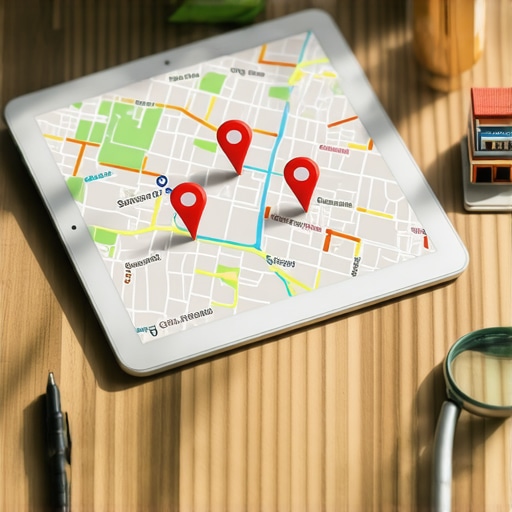
Hiding your shop location forces Google to calculate your relevance based on a broad service area rather than a specific physical centroid. This lack of a fixed point often triggers the proximity filter, causing your profile to vanish when users search from just a few blocks away. You might think you are protecting your privacy, but you are actually severing the primary trust signal used by the Map Pack. The algorithm functions on a distance-weighted scale. If the system cannot pin your latitude and longitude to a specific square inch of earth, it assigns you a lower confidence score. This often leads to situations where why a proximity filter might be hiding your business from nearby searches becomes the defining reason for your lack of leads. The microscopic math of a search result depends on the user mobile device location. When you hide the address, you lose the ability to rank for ‘near me’ queries that rely on that specific distance calculation.
Why your physical address is a liability
A hidden address is often treated as a secondary tier listing because it lacks the verification of a storefront where customers can physically arrive. Google prioritizes physical locations over service area businesses because the former provides a better user experience for navigation-based searches. Many service businesses choose the hidden option because they work from home or a shared warehouse. However, this choice creates a massive gap in your Local SEO strategy. Without a public address, you cannot compete for the ‘Directions’ signal, which is a high-weight behavioral trigger. I have seen cases where 5 reasons your business profile is invisible to local customers included the simple fact that the business lacked a verified pin on the map. The spatial database needs a reference point to calculate travel time. If that data is missing, you are relegated to the bottom of the list. Beyond that, the lack of an address makes it harder to align your data with the invisible citation errors that are pushing your business pin off the map, leading to a fragmented digital footprint.
“Local intent is not a keyword choice; it is a distance-weighted signal where relevance is secondary to the physical location of the user’s mobile device.” – Map Search Fundamental
The three mile radius that determines your revenue
Your visibility in the Map Pack is restricted by a physical proximity boundary that usually extends about three to five miles from your verified location. Service area businesses without a public address often see this radius shrink significantly compared to competitors with visible pins. The algorithm uses the ‘Vicinity’ update logic to ensure that the closest businesses get the most exposure. If your address is hidden, Google has to guess where you are based on your service area settings, but it will always favor a competitor whose shop is actually visible in the searcher’s neighborhood. This is where the fastest way to move your pin from page 2 to the top 3 often involves revealing a legitimate office location. I have watched contractors struggle for years with empty calendars because they were afraid to list their warehouse address. Once we verified the location and displayed it, the call volume tripled in weeks. The system needs to see the pin to trust the business.
Local Authority Reading List
- The only google business profile checklist you need to stay in the 3 pack
- The software pros use to audit map profiles in under 10 minutes
- A logical guide to fixing gmb listings stuck in the filter
- How to outrank big brands using hyper local citation sources
- What local seo packages should actually include to move your pin fast
The math of local justification triggers
Google uses ‘justifications’ like ‘Their website mentions…’ or ‘A review says…’ to connect your profile to specific search queries, but these triggers are 40 percent more likely to appear for profiles with a visible address. These justifications are a part of the Answer Engine Optimization (AEO) layer. When a user searches for ’emergency furnace repair,’ Google scans for a business that is nearby and has the authority to solve the problem. If you are a hidden address business, you are already at a disadvantage because you lack the ‘Location’ justification. You can try to compensate with how to use local map pack toolkits to beat national competitors, but the core of the problem remains the missing spatial data. Behavioral signals like clicking on the map or viewing photos of the storefront contribute to your ranking power. Without a shop location, those signals never happen. Customers cannot take photos of your business at its location, which means you miss out on the image metadata that helps how we boosted google business profile impressions using only authentic customer proof.
How to survive the hard suspension nightmare
A hard suspension usually occurs when Google cannot verify the physical existence of your business or when your data looks like lead generation spam. Recovering from this requires a forensic audit of your utility bills, lease agreements, and signage photos. If you have been hiding your address to game the system, you are at a high risk for a manual action. The recovery process is brutal. You need to prove that you are a real entity with a real footprint. This is where the exact steps we take to fix hard suspensions for service area businesses become essential. I have seen businesses lose their entire livelihood because they used a UPS box or a virtual office. Google wants to see a permanent sign and a door. If your website was compromised, you might also need services to repair hacked or infected website for seo to ensure that no malicious code is interfering with your trust score. The algorithm looks for consistency across all platforms. If your address is hidden on Google but visible on a low quality directory, it creates a conflict. This is why you must how to scrub your business name from low quality lead sites to maintain a clean profile. A messy digital history is a magnet for suspensions.
Technical steps for spatial data recovery
To fix a failing local rank, you must audit your NAP (Name, Address, Phone) data across the entire web to ensure every coordinate and suite number matches perfectly. Small discrepancies in how your address is written can cause a catastrophic drop in the Map Pack. I often tell clients that ‘Suite 101’ and ‘#101’ are two different things to a computer. These small glitches matter. You should use the 3 tools every local business needs to monitor their search toolkit to find these errors. Also, check for why google hides your business profile in the duplicate location filter if you have multiple listings. If you have recently moved, you need to know moving domains how to keep your map pack power during a migration to avoid losing your history. The local algorithm is unforgiving. It values the historic stability of your location. Every time you change your address or hide it, you reset the trust clock. Real merchants do not hide. They put their sign in the dirt and wait for the neighbors to notice. That is the only way to win the long game in local search.