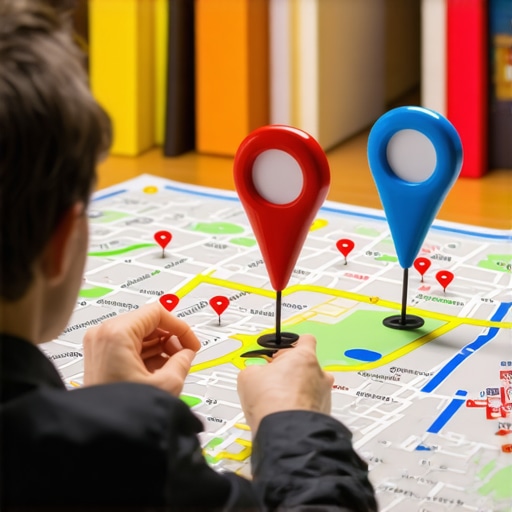
Why Generic Reviews Aren’t Moving Your Map Pin and What Actually Works
Why Generic Reviews Aren’t Moving Your Map Pin and What Actually Works
It is the single most common frustration I hear from business owners today: “Shahid, I have over 50 five-star reviews, but my competitor with only 15 is sitting at the top of the Map Pack. What am I doing wrong?” If you are staring at your Google Business Profile (GBP) wondering why your mounting pile of five-star accolades isn’t translating into a higher map pin, you are not alone. The reality of google business profile seo has shifted dramatically as we move into 2026. The days when a high star count was the primary driver of local visibility are long gone.
Today, Google’s AI-driven algorithm – powered by advanced Natural Language Processing (NLP) – doesn’t just count stars; it reads. It is looking for “Entity Proof” and “Semantic Relevance.” It wants to know not just that you are “good,” but specifically what you do and where you do it, as verified by the unbiased voices of your customers. In this deep dive, we will explore why generic reviews are a dead end and how you can pivot your strategy to dominate the local 3-pack using data-backed “Ranking-Fuel” reviews.
The “Great Service!” Trap: Why 5 Stars Aren’t Enough in 2026
For years, the standard advice was simple: get more reviews. Business owners responded by incentivizing or begging for any kind of feedback. The result? Profiles littered with reviews that say “Great service!”, “Five stars!”, or “Highly recommend!” While these are great for conversion – meaning they help a customer choose you once they find you – they do almost nothing for google business profile seo or helping that customer find you in the first place.
Why? Because “Great service!” provides zero data points to Google’s algorithm. Within the “Prominence” ranking factor, which accounts for a massive portion of the local algorithm, review signals hold a 35% weight. However, when we look at the internal distribution of that weight, Review Keywords/Text accounts for 10% of the prominence signal. When a customer leaves a generic review, you are essentially leaving that 10% ranking boost on the table.
In contrast, a “Semantic Review” acts as a localized backlink. If a customer writes, “The team provided the best emergency pipe repair in Houston, arriving within 30 minutes to fix our burst water main,” they have just handed Google a goldmine of relevance. They have confirmed your service (emergency pipe repair) and your location (Houston). This is the difference between a vanity metric and a ranking signal. If your profile is stagnant, it may be because your reviews lack the technical substance required to move the needle. For more on why your visibility might be lagging, check out our guide on 5 Reasons Your Business Profile Is Invisible to Local Customers.
Decoding the Local Algorithm: Relevance, Proximity, and Prominence
To understand why specific review text is so powerful, we must look at the three pillars of local search: Relevance, Distance, and Popularity (Prominence). While you cannot control Distance (the user’s physical location), you have significant control over Relevance and Prominence.
Relevance is how well a local business profile matches what someone is searching for. If a user searches for “water damage restoration,” Google looks at your primary category, your services list, and – crucially – your reviews to see if people actually talk about you performing that specific task. Utilizing a professional google maps ranking service can help you align your profile’s technical data, but the reviews provide the social proof that validates that data.
Prominence refers to how well-known a business is. This is where the 35% review factor lives. Google measures prominence based on information it has about a business from across the web, including links, articles, and directories. In the context of reviews, Google is looking for “Entity Proof.” If multiple customers mention specific brand names, specific neighborhoods, and specific services, Google’s confidence in your business “entity” grows. This is why being the closest shop isn’t enough to rank now on maps; a business three miles further away with higher “Relevance” and “Prominence” through detailed reviews will often outrank the closer, more generic competitor. See our breakdown on Why being the closest shop isn’t enough to rank now on maps for a deeper look at this phenomenon.
The Anatomy of a “High-Value” Review
If you want to rank google business profile assets effectively, you need to treat every review as a piece of content marketing. A high-value review that actually moves the map pin consists of three distinct elements:
1. Service Keywords
The review must mention the specific job performed. Instead of “They did a great job,” the algorithm needs to see “They did a great job installing our new HVAC system.” This confirms to Google that you are an authority in that specific service category. It bridges the gap between what you claim to do and what you actually do.
2. Geo-Modifiers
Local SEO is about geography. When a customer mentions their neighborhood (e.g., “best plumber in Summerlin” or “fast service here in downtown Orlando”), it reinforces your service area. This helps expand your “ranking bubble” beyond your immediate physical office location. To effectively rank higher on google maps, these geographic signals are non-negotiable.
3. User-Generated Photos with Metadata
Photos are the ultimate “Entity Proof.” When a customer uploads a photo of the completed work, Google uses AI to identify the objects in the image (e.g., a freshly painted wall, a repaired roof). Furthermore, photos often contain EXIF data (GPS coordinates) that confirm the photo was taken within your service area. This is a massive trust signal that generic reviews lack. For a technical deep dive, read Why Real Photos Are the Fastest Way to Rank Now on Maps [2026]. To ensure your profile is fully optimized for these features, businesses should leverage google business profile optimization to ensure all fields are filled and ready to receive this high-quality content.
Review Velocity vs. Review Spam: The 2026 Standard
While the content of the review is vital, the timing is equally important. Within the 35% prominence weight, Review Velocity accounts for 25%. Review velocity is the speed at which you acquire new reviews.
Google’s spam filters are more sensitive than ever in 2026. If a business that typically gets two reviews a month suddenly receives 25 reviews in a single weekend, it triggers a “red flag.” This often leads to reviews being hidden or the profile being suspended for suspicious activity. Conversely, a profile that has stopped receiving reviews entirely is seen as “stale.” Google wants to provide users with businesses that are currently active and popular.
The goal is a steady “drip” of 2 – 3 high-quality reviews per week. This signals a healthy, functioning business. It is much better for your local map pack seo to have a consistent flow than a sudden burst. We’ve documented this process in our case study, How we tripled 5-star reviews without bothering a single customer, which focuses on creating automated systems for consistent acquisition.
How to Prompt Your Customers for “Ranking-Fuel” Reviews
Most customers want to be helpful, but they don’t know how to write a review that helps your SEO. They need a prompt. Instead of sending a generic link saying, “Please leave us a review,” you need to guide them. This is where the right local seo tools can make a difference by automating specific requests.
Try using a script like this: “We’re so glad you’re happy with the work! Would you mind leaving us a quick review? It really helps if you could mention the specific service we provided (like the kitchen remodel) and which neighborhood you’re in. Also, if you took any photos of the finished project, feel free to add them!”
By asking specific questions, you are essentially “priming” the customer to include the keywords and geo-modifiers that the algorithm craves. This strategy turns a standard 5-star rating into a powerful gmb seo tool. To improve google maps rankings, you must focus on semantic relevance in every interaction. If you are looking for more advanced ways to automate this, visit the website of seovipertools.com for advanced audit features and review management strategies.
For more advanced tactics, see our guide on 7 map pack takeover tactics that actually beat keyword-stuffing rivals.
The Role of Review Replies in Local SEO
There is a long-standing debate in the Local Search Forum regarding whether replying to reviews directly boosts your ranking. While the consensus is that review replies are likely not a “primary” ranking factor, they are a significant “secondary” signal.
When you reply to a review, you are doing two things. First, you are increasing the “freshness” of your profile. Second, you are providing another opportunity to include semantic keywords. If a customer mentions “great plumbing,” your reply can say, “Thank you! We take pride in being the top-rated emergency plumber in North London.”
More importantly, active engagement encourages more brand searches. When users see a business that interacts with its customers, they are more likely to click. High click-through rates (CTR) from the search results are a massive ranking signal. If you find that Why your 5-star reviews aren’t moving the needle on maps is a recurring problem for you, start by looking at your engagement levels. Tracking these changes requires robust local seo tools like SEO Viper Tools to see how engagement correlates with rank shifts.
Conclusion: Auditing Your Review Strategy for a Map Pack Takeover
In 2026, the quantity of your reviews is just the baseline. To truly dominate the local 3-pack, you must shift your focus toward the quality, velocity, and semantic depth of your feedback. Remember the 10-review threshold: research suggests that once a profile hits 10 reviews that are rich in keywords and photos, the ranking shift is significantly more pronounced than if those reviews were generic.
Stop chasing the “Great service!” trap. Start coaching your customers to provide the “Entity Proof” that Google’s AI requires. By focusing on relevance, proximity, and prominence, you can turn your Google Business Profile into a lead-generation powerhouse. If you’re ready to see exactly where your profile stands, I recommend using a professional google business profile audit tool or local seo software from seovipertools.com to track your progress and outpace your competition.