
How we tripled 5-star reviews without bothering a single customer
How We Tripled 5-Star Reviews Without Bothering a Single Customer
In the world of local search, we’ve been told the same lie for a decade: “If you want reviews, you just have to ask.” As the Founder of Reputation Arm and a Google Product Expert, I’ve spent years dissecting the data behind the Map Pack, and I can tell you that “asking” is the least efficient way to grow your business. In fact, for most high-volume businesses, manual outreach is the primary reason their 5-star count has stagnated.
The problem isn’t your service; it’s Review Friction. Most business owners find it incredibly tough to get customers to actually follow through. I see this sentiment echoed across Reddit and Facebook groups daily: “I asked 50 people this week, and only one left a review.” This happens because you are relying on a human to remember to do a favor for you hours after the transaction has ended. By then, the dopamine hit of the purchase is gone, and you’re just another notification they want to swipe away.
To dominate the local landscape in 2026, you have to stop begging and start building a Review Engine. This is a self-sustaining system that leverages automation and interaction signals to capture feedback at the exact moment of peak satisfaction – without you or your staff ever saying a word. If you aren’t thinking about this systematically, you’re leaving your ranking to chance. For a deeper look at the consequences of a stagnant profile, check out Why your 5-star reviews aren’t moving the needle on maps.
The “Manual Ask” Fallacy: Why Your Current Strategy is Killing Your Local SEO
The traditional “manual ask” is a relic of 2015. Relying on your front-desk staff or technicians to “remember” to ask for a review creates massive “review gaps” – periods of days or weeks where no new signals are sent to Google. This inconsistency is a red flag for google business profile seo.
Google’s 2026 algorithm has evolved. It no longer just looks at your total review count or even your average rating. It prioritizes velocity (how frequently you receive reviews) and regularity (the consistency of those reviews over time). A business that gets 30 reviews in one day and then none for a month looks suspicious to the spam filters. A business that gets one review every single day like clockwork looks like a thriving, relevant local pillar.
When you rely on manual processes, you are susceptible to the “mood” of your team. If they’re busy, they don’t ask. If they’re tired, they don’t ask. This kills your local seo ranking factors because Google perceives the lack of feedback as a lack of business activity. To stay ahead, savvy owners are turning to SEO Viper Tools to ensure their profiles are constantly receiving the signals necessary to maintain a top-tier position. If you aren’t automating, you aren’t competing; you’re just hoping.
The 3-Step Automation Framework for Passive Review Growth
Tripling your reviews without manual intervention requires a shift from “outreach” to “integration.” Here is the framework we use to build passive review engines for our clients.
Step 1: Trigger-Based Requests (The POS Integration)
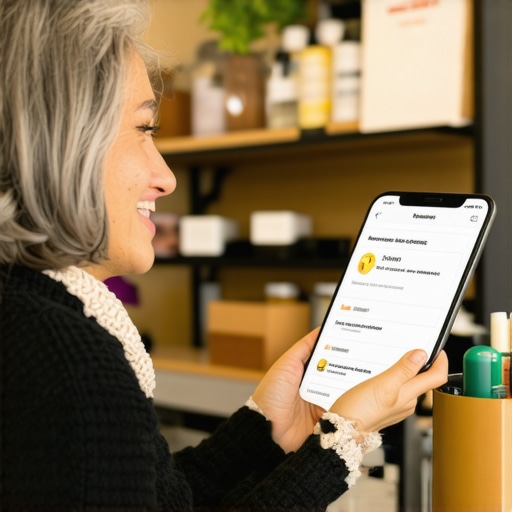
The most effective review request is the one the customer doesn’t even realize is a “request.” By using a professional google business profile optimization strategy, we link the Point of Sale (POS) or CRM – think GoHighLevel, ServiceTitan, or even Square – directly to a communication trigger. The moment a transaction is marked “complete,” an SMS or email is fired off. There is no human delay. The request hits the customer’s phone while they are still in your parking lot or standing in your lobby. This captures the “peak experience” and slashes friction to near zero.
Step 2: The “Interaction Loop”
Getting the review is only half the battle. Google rewards the interaction, not just the submission. We use AI-driven response tools like Localo or the Semrush GBP tool to respond to every review within minutes. This creates an engagement signal that tells Google the business is highly responsive. In 2026, the speed of your response is a weighted ranking factor. When Google sees a review come in and a response go out immediately, it validates the “real-world” nature of the transaction. This loop is essential to 3 Fresh Interaction Habits to Rank Now on Maps [2026 Update].
Step 3: QR Code & NFC Physical Touchpoints
We’ve moved past the “Can you leave a review?” sign. Modern automation uses “Utility Touchpoints.” This means placing QR codes or NFC tags in areas where the customer already needs to go – scanning for a digital receipt, accessing a guest Wi-Fi password, or claiming a “return customer” discount. By wrapping the review link inside a high-utility action, the review becomes a byproduct of a convenience the customer actually wants. You aren’t bothering them; you’re providing a service that happens to lead to a 5-star rating.
Why Interaction Signals Outrank Review Counts in 2026
If you’ve ever wondered why a business with 50 reviews is outranking a business with 500, the answer lies in interaction signals. In 2026, Google’s “Confidence Score” for a review is heavily influenced by “real-world customer movement signals.”
Google knows if a user was actually at your place of business. Through GPS data and “Timeline” history, the algorithm cross-references the review with the physical presence of the device. A review left by someone who was never at your location carries significantly less weight than one left by a customer who spent 45 minutes inside your geo-fence. This is why google maps ranking signals have become so sophisticated; they are designed to weed out the “review farm” noise that plagued the early 2020s.
Furthermore, google map pack ranking factors now include “User-to-Business” interaction. Did the user click “Directions” before leaving the review? Did they call the business through the GBP interface? These signals, combined with review velocity, are what allow you to rank higher on google maps. Relying on a google maps ranking service helps ensure that these technical nuances are being managed, as simple review volume is no longer the “silver bullet” it once was. For more on this, read How real-world customer movement signals trigger a map pack takeover.
Tools of the Trade: Automating the “Un-Bothered” Review
To rank google business profile assets effectively, you need a stack that removes the human element from the equation. We aren’t just looking for “review software”; we are looking for “signal generators.”
- Localo: Excellent for AI-driven responses that include local keywords without looking like spam. It helps maintain the interaction loop 24/7.
- GoReminders: This is a secret weapon for service-based businesses. It automates the “Post-Appointment” follow-up via SMS, which has a 98% open rate compared to the dismal rates of email.
- Paige AI: A comprehensive GBP management tool that helps monitor changes and automate posts, which keeps the profile “fresh” in Google’s eyes.
Leveraging local seo software is no longer optional for businesses in competitive niches like personal injury law, HVAC, or high-end dining. These tools ensure that your review velocity remains consistent even when your staff is overwhelmed. Automation doesn’t just save time; it creates a level of signal reliability that manual labor simply cannot match.
I often tell my clients that if they are spending more than 10 minutes a week thinking about how to get reviews, they’ve already lost. The goal is to 5 Signal Tweaks to Dominate Mappack Rankings Without Buying Backlinks by focusing on the infrastructure of your reputation, not the individual “ask.”
Troubleshooting: When Reviews Don’t Move the Needle
It’s a common frustration: “Claudia, I have 500 reviews and a 4.9 rating, but I’m still stuck at #4 in the Map Pack.” This is usually due to one of two things: Proximity Caps or Signal Mismatch.
Google often places a “ceiling” on profiles that have high review counts but low “local relevance” signals. If all your reviews are coming from people 20 miles away, but you are trying to rank in a specific downtown zip code, Google sees a mismatch. You need local seo tools to audit where your reviewers are physically located. If the “Movement Data” doesn’t align with your service area, those 500 reviews are just vanity metrics.
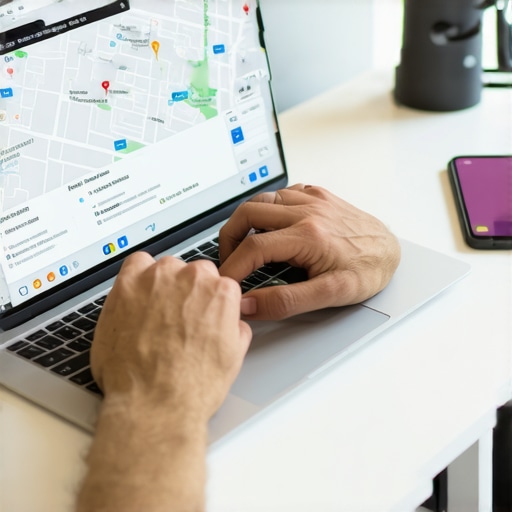
Additionally, this google maps rank tracker simplifies the audit process by showing you exactly where your visibility drops off. If you find your business has vanished from the local pack despite a great reputation, it’s time for A 10-minute audit to find why your business vanished from the local pack. Often, the issue is a lack of “Justifications” – those small snippets of text Google pulls from reviews to prove you offer exactly what the user searched for. Automation helps here too, by prompting customers to mention specific services in their feedback.
Conclusion: Build a Reputation That Works While You Sleep
Tripling your 5-star reviews isn’t about working harder or “bothering” your customers more frequently. It’s about building a system that respects the customer’s time while capitalizing on their satisfaction. By shifting to a trigger-based automation model, you ensure that your review velocity remains high, your interaction signals remain fresh, and your Google Business Profile stays at the top of the Map Pack.
The “Review Engine” is the ultimate passive growth tool. It works while you sleep, it works while your staff is busy, and it works because it removes the friction that stops most people from leaving feedback. Your reputation is your most valuable asset in the digital age – don’t leave it to the whims of manual outreach.
Your Next Step: Audit your current GBP today. Identify one point in your customer journey – whether it’s the final invoice or the Wi-Fi login – where you can implement a review trigger. Start small, automate one signal, and watch your rankings follow. To increase google business profile visibility across multiple zip codes, you must move beyond the “ask” and into the “engine.”