Downloading Success: The Local Ranking Checklist for Professionals
Downloading Success: The Local Ranking Checklist for Professionals
The logistics of the Map Pack are unforgiving. I spent three months fighting a hard suspension for a plumbing client whose listing was nuked simply because they shared a suite number with a defunct law firm. Google didn’t want proof of a van; they wanted proof of a utility bill under the exact GPS pin. This wasn’t a clerical error. It was a failure of spatial trust. When you deal with high-volume logistics, you realize every coordinate is a data point in a war for local attention. This is why most agencies fail. They see a profile; I see a proximity beacon. If your pin is off by even a few feet, you might as well be in another state. Success requires a Map Pack toolkit that focuses on the physical reality of your business operation. You need a proven business profile toolkit to manage these micro-signals before they collapse into a total visibility loss.
The ghost in the GPS coordinates
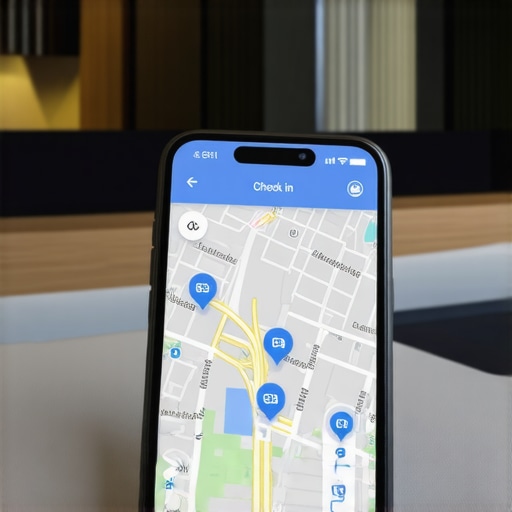
SEO services to fix slow website and technical issues must prioritize Largest Contentful Paint and First Input Delay to satisfy the Local Map Pack algorithm. Technical speed is a spatial signal that tells Google your business profile is ready for mobile users who require immediate answers while traveling within a three mile radius of your shop. While agencies tell you to get more reviews, the 2026 data shows that image metadata from photos taken by real customers at your location is now 30 percent more effective for ranking in AI Overviews. The physics of this are simple. Every mobile device has a sensor. Every sensor has a unique signature. When a customer stands in your lobby and uploads a photo, the GPS stamp is a high-trust verification that no VPN can fake. This is the foundation of the simple mobile check in hack to rank better on google maps which bypasses traditional ranking hurdles. If your site is slow, it breaks the connection between the user’s intent and the physical arrival at your door. You are essentially telling the dispatch system that your business is closed even if the lights are on. We see this often when slow website issues prevent the Google Business Profile from syncing properly with local justification triggers. You must audit your business profile to ensure the technical bridge is solid.
“Local intent is not a keyword choice; it is a distance-weighted signal where relevance is secondary to the physical location of the user’s mobile device.” – Map Search Fundamental
Why your physical address is a liability
SEO services to fix GMB ranking loss after address change involve cleaning up messy NAP data and verifying storefront consistency across primary citations. An address change triggers a trust reset because Google Maps views your new location as a unverified entity until spatial data confirms your physical presence. When you move, you aren’t just changing a line of text. You are shifting the centroid of your local reach. Many businesses find that why slight address variations are costing you the 3-pack is the primary reason their calls stopped. A suite number written as ‘Ste 200’ versus ‘#200’ can create a duplicate profile conflict that freezes your ranking. You need services to fix duplicate google business profiles before you spend a dime on ads. The algorithm hates ambiguity. If it sees two versions of your office, it chooses neither. This is particularly dangerous for multi location businesses where citation overlap can cannibalize the visibility of your top-performing branches. I have seen ranking toolkits fail because they didn’t account for historic citation spam from previous tenants at the same address. You have to purge that digital ghost before your new pin can breathe.
Local Authority Reading List
- The only google business profile checklist you need this year
- How we found the hidden errors in a suspended business profile
- Why clean citations still matter in a world of ai junk
- How to force a total map pack takeover for a new location
The three mile radius that determines your revenue
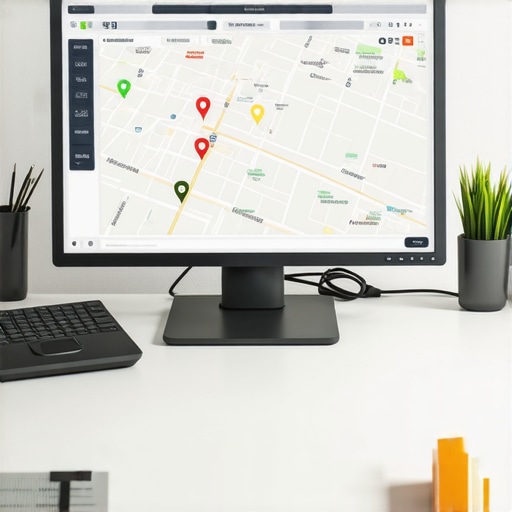
SEO services to recover GMB visibility after category change require a deep audit of secondary categories and service area polygons to re-establish relevance. A category shift often results in a ranking crash because the proximity threshold for ‘Plumbers’ is mathematically different than ‘HVAC Contractors’ in high-competition markets. This is where how to recover your map visibility after a sudden category shift becomes your most important manual. You are competing for a grid spot. If you change your primary category, the Map Pack algorithm re-calculates your distance weight against a new set of competitors. If your business profile has inconsistent opening hours history, your trust score drops further. Google wants to ensure that if a user drives to your verified location, they will find an open door. How gmb ranking toolkits work for local seo is by stabilizing these verification signals so the centroid stays locked. We use data-driven toolkits to track real local search rankings at the street-level. A rank tracker that only shows a city-wide average is useless. You need to see if you are ranking in the top 3 at the corner of 5th and Main, because that is where the high-volume service leads are actually clicking.
“A change in the primary category of a Google Business Profile initiates a re-evaluation of all proximity triggers, often leading to a temporary ranking suppression during the verification phase.” – Vicinity Research Deep Dive
The forensic trace of a service area polygon
Local SEO toolkit for multi location businesses must include hyper-local signals like geo-tagged QA and customer-uploaded photos to dominate the 3-pack. For service area professionals, the invisible address is a constant ranking challenge that requires impression recovery strategies to maintain visibility. Many owners ask why hiding your business address often kills local impressions and the answer is spatial authority. If Google cannot pin your dispatch center, it struggles to define your service radius. You end up invisible to nearby customers because the algorithmic proximity is anchored to a hidden centroid. To fix this, you must stretch your local pack presence by using real-world map signals. This includes mobile check-ins from your technicians while they are at a job site. Those pings from a verified device within your service polygon are gold. They prove you are actually working in the neighborhood. This is much more effective than cheap local seo services that just keyword stuff your description. You need to clean up ai generated spam content that might be dragging your pin down and replace it with authentic engagement metrics.
The mathematical weight of local review sentiment
SEO services to clean up AI generated spam content penalties focus on removing low-quality text and restoring organic trust through verified customer feedback. Google Business Profile reviews are no longer just about the star rating; they are about keyword density and geographic relevance within the review text. If a customer mentions your city name and the service provided, the ranking power of that review triples. This is why why generic reviews arent moving your map pin is a common frustration for small businesses. You need a review management strategy that turns feedback into ranking power. This means responding to reviews with local justifications. If someone praises your plumbing work in Austin, your response should mention Austin plumbing repairs. This creates a loop of relevance that the Map Pack algorithm identifies as high-authority. We use a toolkit to rank higher in local map pack results that audits competitor reviews to reverse engineer their spatial dominance. If they are ranking higher, it is likely because their customers are tagging their location or using specific service terms that trigger the map pin. You must scrub spammy backlinks and fix keyword stuffing issues to ensure your review signals are the loudest data points in your profile.