The penalty-free way to build city landing pages for local search
I smell the wet concrete of a city morning after a heavy rain. I see the storefront through a cracked lens; the data is rarely as clean as the glass. The truth about local search is hidden in the glitches. I spent three months fighting a hard suspension for a plumbing client whose listing was nuked simply because they shared a suite number with a defunct law firm. Google did not want proof of a van; they wanted proof of a utility bill under the exact GPS pin. That experience taught me that the map is not the territory; the map is a database of proximity signals that can be manipulated or lost in a single update. To rank, you must understand the microscopic math of location.
The ghost in the GPS coordinates
City landing pages must prioritize hyper-local user intent by mapping specific GPS coordinates to unique service offerings rather than duplicating text. A city landing page is not a doorway; it is a bridge between a searcher in a specific neighborhood and the physical reality of your service. When you build these, you are not just writing copy; you are defining a service area polygon. If you get this wrong, you trigger the spam filter. You need to focus on [the specific schema tweaks that help google understand your shops location](https://dominatethemappacknow.com/the-specific-schema-tweaks-that-help-google-understand-your-shops-location) to ensure the engine sees the distinction between a satellite office and a main hub. The data must be crisp. The coordinates must be exact. The pin moved. The user followed. If your data is fuzzy, the system ignores you. This is why many businesses fail to see results; they use [the truth about cheap local seo services and why they fail small businesses](https://dominatethemappacknow.com/the-truth-about-cheap-local-seo-services-and-why-they-fail-small-businesses) as their guide instead of actual engineering.
“Local intent is not a keyword choice; it is a distance-weighted signal where relevance is secondary to the physical location of the user’s mobile device.” – Map Search Fundamental
Why your physical address is a liability
Physical addresses become a liability when they lack distinct utility signals or share proximity with high-spam categories, leading to automated filtering in the local 3-pack. I have seen it happen. A business moves into a building once occupied by a lead-gen farm. The address is tainted. The engine remembers the historic spam. You must audit the footprint before you sign the lease. Use [the simple audit that cleans up years of messy business data](https://dominatethemappacknow.com/the-simple-audit-that-cleans-up-years-of-messy-business-data) to scrub the digital history. If you are a service area business, the lack of a physical office can be a hurdle. However, [the strategy service area businesses use to secure top map spots without an office](https://dominatethemappacknow.com/the-strategy-service-area-businesses-use-to-secure-top-map-spots-without-an-office) proves that distance-weighting can be beaten with high-authority signals. It requires a forensic approach to NAP (Name, Address, Phone) consistency. You cannot afford a single mismatched digit in your secondary verification tier. One wrong number in a forgotten directory is enough to kill your trust score. Check your listings. Fix the errors. The system is watching for the slightest variation.
The three mile radius that determines your revenue
Proximity filters restrict visibility to a tight radius around the searcher, making specific city landing pages necessary to signal relevance in peripheral neighborhoods. Imagine a circle. If you are at the center, you win. If you are on the edge, you vanish. This is the centroid collapse. To expand your reach, you must provide localized justifications. This means your city pages should mention local landmarks, specific intersections, and neighborhood-specific problems. Stop using generic templates. Google knows when you are just swapping out city names. Instead, focus on [how local niche signals beat city-wide competition every time](https://dominatethemappacknow.com/how-local-niche-signals-beat-city-wide-competition-every-time). You need to prove you are active in that specific zip code. Upload photos of your team working in that area. Use [how to use recent profile updates to push past your local competitors](https://dominatethemappacknow.com/how-to-use-recent-profile-updates-to-push-past-your-local-competitors) to keep the signals fresh. Static pages are dead. Active beacons are the future. The math of a check-in signal is more powerful than a thousand keywords.
Local Authority Reading List
- [Why your city landing pages feel like spam and the local signal fix they need](https://dominatethemappacknow.com/why-your-city-landing-pages-feel-like-spam-and-the-local-signal-fix-they-need)
- [The simple tactic contractors use to jump into the top 3 map pack](https://dominatethemappacknow.com/the-simple-tactic-contractors-use-to-jump-into-the-top-3-map-pack)
- [Stop making doorway pages the right way to rank for multiple cities](https://dominatethemappacknow.com/stop-making-doorway-pages-the-right-way-to-rank-for-multiple-cities)
- [The invisible citation errors that are pushing your business pin off the map](https://dominatethemappacknow.com/the-invisible-citation-errors-that-are-pushing-your-business-pin-off-the-map)
The forensic trace of a service area polygon
Service area polygons require precise geographic definitions within Google Business Profile settings to avoid overlapping filters that hide your business from local customers. When you define your area, do not just pick a whole state. That is a red flag. Pick specific cities. Use [the 15-minute profile audit that finds why your business is stuck on page two](https://dominatethemappacknow.com/the-15-minute-profile-audit-that-finds-why-your-business-is-stuck-on-page-two) to see where your signals are dropping. I once saw a roofer lose half their leads because they claimed a service area that overlapped too heavily with a competitor who had a physical office. The proximity filter chose the office over the service area. You have to fight that with behavioral signals. Reviews from customers in those specific cities are vital. But do not just get reviews; get [the honest review script that lands 5-star feedback every time](https://dominatethemappacknow.com/the-honest-review-script-that-lands-5-star-feedback-every-time). The content of the review matters as much as the star rating. Google looks for city names in the review text. It looks for mentions of the specific service provided. This is the forensic trace of real business activity. It is hard to fake. It is impossible to ignore.
“The proximity of the business to the searcher is the single most influential factor in the Map Pack, often overriding traditional organic SEO signals.” – Vicinity Algorithm Research
The physics of the local ranking toolkit
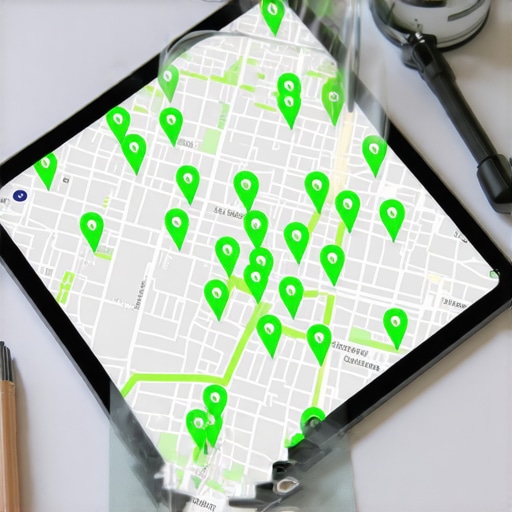
GMB ranking toolkits provide real-time data on map pack movement, allowing agencies to monitor suspensions and technical issues that threaten local visibility. Comparing a [gmb ranking toolkit vs other local seo tools](https://dominatethemappacknow.com/choosing-a-ranking-toolkit-that-focuses-on-actual-user-signals) is like comparing a telescope to a microscope. One shows you the stars; the other shows you the bacteria on the lens. You need both. You need to know [the tools we use to track map pack movement in real-time](https://dominatethemappacknow.com/the-tools-we-use-to-track-map-pack-movement-in-real-time) to see how the grid shifts throughout the day. Your rank at 10 AM is not your rank at 4 PM. The algorithm is fluid. It responds to the density of mobile devices in the area. If you see a dip, it might not be your content. It might be a technical glitch. Use [seo services to fix slow website and technical issues](https://dominatethemappacknow.com/the-technical-steps-to-clean-a-hacked-wordpress-site-for-seo) to ensure your mobile experience is perfect. Slow sites kill local rankings. Users on mobile devices will not wait three seconds for a map to load. They will click the next pin. Speed is a proximity signal. Reliability is a ranking factor.
Recovering from the manual action trap
Manual actions on local profiles often stem from misleading business names or fake review issues, requiring forensic audits and official reinstatement requests to restore search visibility. If you have been hit, do not panic. Use [seo services to remove google manual action](https://dominatethemappacknow.com/practical-ways-to-rebuild-authority-after-a-local-manual-action). The process is grueling. You must provide specific evidence. Google wants to see the real storefront. They want to see the business license. They want to see that you are a real person in a real place. If you were using [seo services to fix fake reviews issues](https://dominatethemappacknow.com/recovering-your-brand-reputation-after-a-spammy-lead-gen-attack), you know the damage that a single bad actor can do. I have helped businesses recover after a competitor flooded them with VPN-based spam. We had to document every user profile. We had to show the pattern. It is like being a detective. You follow the digital paper trail until it leads to the source. Once the garbage is cleared, you can start rebuilding. Use [the natural way to get 5-star google reviews without pestering your customers](https://dominatethemappacknow.com/the-natural-way-to-get-5-star-google-reviews-without-pestering-your-customers) to restore your reputation. Authenticity is the only currency that lasts. Everything else is just noise in the machine.
Mastering the Local Ecosystem
- [The only google business profile checklist you need to stay in the 3-pack](https://dominatethemappacknow.com/the-only-google-business-profile-checklist-you-need-to-stay-in-the-3-pack)
- [The specific evidence google wants to see for gmb reinstatement](https://dominatethemappacknow.com/the-specific-evidence-google-wants-to-see-for-gmb-reinstatement)
- [How to spot a map optimization company thats just selling empty reports](https://dominatethemappacknow.com/how-to-spot-a-map-optimization-company-thats-just-selling-empty-reports)
- [What data-driven competitor analysis tells us about google maps seo in 2026](https://dominatethemappacknow.com/what-data-driven-competitor-analysis-tells-us-about-google-maps-seo-in-2026)
The math of local engagement metrics
Engagement metrics such as click-through rates from the map pack and direction requests act as behavioral weight, pushing your pin higher in the local search results. When a user clicks ‘Directions,’ it tells Google your business is a destination. That is worth more than a dozen backlinks. You need to understand [the engagement metrics that actually push your map pin higher](https://dominatethemappacknow.com/the-engagement-metrics-that-actually-push-your-map-pin-higher). It is about real human movement. If you want to boost this, make your profile irresistible. Use high-quality, candid photos. Avoid stock images. I can spot a stock photo from a mile away; so can Google. They want to see the scuffs on the floor and the smile on the technician’s face. They want to see the reality of your shop. This is why [how we boosted google business profile impressions using only authentic customer proof](https://dominatethemappacknow.com/how-we-boosted-google-business-profile-impressions-using-only-authentic-customer-proof) works so well. It builds trust. Trust leads to clicks. Clicks lead to calls. Calls lead to revenue. The cycle is simple, but the execution must be flawless. Do not overlook the small things. Even your opening hours history matters. Use [the simple fix for gmb profiles with messy opening hours history](https://dominatethemappacknow.com/the-simple-fix-for-gmb-profiles-with-messy-opening-hours-history) to keep your data clean. Every detail is a signal. Every signal is a chance to rank.
Survival in the map pack ecosystem
The local map pack is a spatial database where relevance is a distance-weighted variable, and only those who master proximity logic will survive the next algorithm update. I have seen the biggest brands get crushed by a single mom-and-pop shop that understood their neighborhood better. It is about hyper-local dominance. You do not need to win the whole city; you just need to win the three miles around your door. Use [how to use local map pack toolkits to beat national competitors](https://dominatethemappacknow.com/how-to-use-local-map-pack-toolkits-to-beat-national-competitors) to find the gaps in their strategy. National brands are slow. They use templates. They do not know the local landmarks. They do not know the local lingo. You do. Use that to your advantage. Build your city landing pages with information gain. Tell the user something they can only find if they live there. Show them you are a part of the community. This is how you build a proximity beacon that shines through the noise. The rain has stopped. The concrete is drying. The storefront is still there, and now, it is visible to everyone who needs it. Stay focused on the grid. Monitor the movement. The pin stays where the trust is built.