How We Help Law Firms Own the Local 3-Pack Without Giant Ad Budgets
How Law Firms Own the Local 3-Pack Without Giant Ad Budgets
In the high-stakes world of legal marketing, the “Pay-to-Play” trap is a financial black hole. If you are a personal injury attorney in a major metropolitan area, you already know the pain of $200, $300, or even $500 per click on Google Ads. Local Service Ads (LSAs) aren’t much better, often forcing firms into a bidding war where the only winner is Google’s bottom line. But while most firms are draining their reserves on PPC, a select few are dominating the most valuable real estate on the internet for free: The Local 3-Pack.
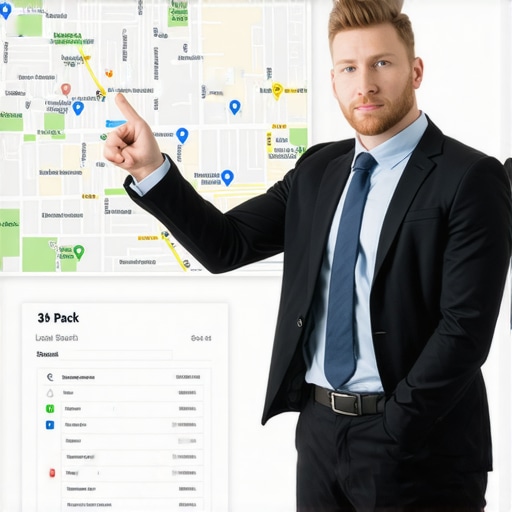
The Local 3-Pack – those three coveted spots appearing directly under the map in a local search – generates over 40% of all clicks for legal queries. These aren’t just any clicks; they are high-intent, local leads looking for immediate representation. My name is Syed Sheraz. Over the last 7 years, I have specialized in local seo for lawyers, helping over 60 firms move from obscurity to the top of the map. My philosophy is simple: SEO isn’t about “trying” things; it’s a math problem. By focusing on high-ROI organic moves, my clients consistently see 1x to 3x growth in lead volume within the first 3 months without touching their ad spend.
This guide is the definitive 2026 blueprint for law firms that want to stop renting their leads and start owning their market through google business profile seo.
The Trinity of Map Rankings: Relevance, Distance, and Prominence
To rank google business profile listings effectively, you must first understand the three pillars of Google’s local algorithm. While Google has introduced numerous updates, including the significant March 2026 Spam Update, the core foundation remains built on Relevance, Distance, and Prominence.
1. Relevance
Relevance is how well a local business profile matches what someone is searching for. If a user searches for “medical malpractice lawyer,” Google isn’t just looking for the word “lawyer.” It is looking for deep signals across your profile, website, and third-party mentions that prove you specialize in malpractice. This is where google business profile optimization becomes your most potent weapon. You must align your categories, services, and even your review content with the specific legal niches you want to dominate.
2. Distance
Distance is the one factor you have the least control over – or so it seems. Google looks at how far a potential client is from your physical office location. However, in 2026, the “proximity” factor has become more fluid. By increasing your “Prominence” and “Relevance,” you can effectively “stretch” your rankings, appearing in the 3-Pack for users who are miles away from your office. This is the hallmark of a high-tier google maps ranking service: making your firm appear as the most logical choice even if you aren’t the closest one geographically.
3. Prominence
Prominence is a measure of how well-known a business is. This is calculated based on information Google has about a business from across the web (links, articles, directories) and your review count/score. In the legal world, prominence is often tied to your local seo ranking signals, such as mentions on high-authority legal sites like Avvo, Justia, and Martindale-Hubbell. To win here, you need to prove to Google that your firm is a pillar of the local legal community.
Google Business Profile Optimization: The 2026 Standard
If your profile hasn’t been updated since 2024, you are likely losing cases to competitors who understand the new technical nuances. Google business profile seo is no longer just about filling out a form; it’s about strategic data entry.
Category Selection: The Primary vs. Secondary Strategy
Your primary category is the single most important ranking factor on your profile. If you are a multi-practice firm, choosing “Law Firm” as your primary category is a mistake. You should choose the most specific, high-value category – such as “Personal Injury Attorney” – as your primary, and use secondary categories for your other practice areas. This focuses your “ranking power” where it generates the most revenue.
The Role of Services and Products
Many law firms ignore the “Products” section because they don’t sell physical goods. This is a missed opportunity. In 2026, savvy firms use the Products section to showcase their primary case types (e.g., “Car Accident Representation,” “Wrongful Death Claims”). This creates a visual “menu” for users and provides Google with additional text to crawl for relevance. Before you make these changes, it is essential to use a google business profile audit tool to see exactly where your profile currently stands compared to the top three competitors in your zip code.
Service Area Businesses (SAB) vs. Physical Offices
The March 2026 Spam Update hit “ghost offices” and virtual addresses hard. To rank higher on google maps now, you must have a legitimate physical presence. If you operate as a Service Area Business (hiding your address), your ranking radius will naturally be smaller. For law firms, I always recommend a staffed physical office. If you have multiple locations, each must have unique, localized content on the corresponding landing page of your website to avoid internal competition.
The Review Engine: Beyond “Get More Stars”
Reviews are the lifeblood of local search optimization, but the strategy has shifted. It is no longer a simple volume game. Google’s AI now analyzes the sentiment and the specific keywords contained within your reviews to determine your expertise.
When a client leaves a review saying, “They were great,” it helps your star rating but does little for your rankings. However, when a client writes, “The best car accident lawyer in Phoenix helped me with my insurance claim,” that review acts as a powerful ranking signal for those specific keywords. You need a proactive system to encourage clients to mention the specific service they received. To master this, you should implement The Review Management Strategy That Turns Lukewarm Feedback Into Ranking Power.
Review Velocity and Response Time
Google tracks how often you get reviews (velocity) and how quickly you respond to them. A sudden influx of 50 reviews followed by six months of silence looks suspicious to the algorithm. Consistency is key. Furthermore, your responses should be personalized. Avoid canned “Thank you for your business” replies. Instead, use your response to subtly reinforce your practice areas and location without being “spammy.”
Advanced “Movement” and “Interaction” Signals
In 2026, Google relies heavily on real-world user behavior to validate its rankings. They want to see that users aren’t just looking at your profile, but interacting with it. These are known as “Movement Signals.”
- Click-to-Call: High volumes of calls directly from the map pack signal that your firm is a high-intent solution.
- Direction Requests: When users click “Directions” and actually move toward your office (tracked via GPS), it is the ultimate verification of your firm’s physical relevance.
- Website Transitions: Google tracks how many users visit your site from the profile and how long they stay there. If they bounce back to the search results immediately, it hurts your prominence.
To stay ahead of the curve, you must understand 4 Real-Time Movement Signals to Rank Now on Maps [2026]. One “stealth” ranking factor we’ve identified is the use of Geo-Tagged Q&A. By having clients ask questions on your profile and providing detailed, keyword-rich answers, you create a localized knowledge base that Google rewards with higher visibility. Similarly, updating your profile with photos containing metadata (EXIF data) that matches your office coordinates provides another layer of verification that local seo tools often overlook.
Local Citations & The “Niche” Advantage
While citation building services used to focus on quantity, the 2026 landscape demands quality and niche relevance. Generic directories like YellowPages still have a place, but for a law firm, they are the bare minimum. To truly increase google business profile visibility, you need “legal-vertical” citations.
The Power of Legal Directories
Google trusts established legal platforms. A backlink and a NAP (Name, Address, Phone) mention from a site like FindLaw or SuperLawyers carries ten times the weight of a local chamber of commerce link. These citations build your “Prominence” by showing Google that you are recognized by your peers and the industry at large.
NAP Consistency and Local SEO Software
If your firm has moved, changed names, or updated its phone number, you likely have “NAP drift.” Inconsistent information across the web confuses Google and can lead to your profile being suppressed or even suspended. If you find your profile is struggling, you should read Why Your Business Profile Suddenly Vanished and the 3-Step Recovery Move. Using local seo software to audit and sync your citations across the top 50 directories is the fastest way to stabilize your foundation and boost google maps ranking results.
How We Turned Maps Into a Customer Machine
I often tell my clients that the Local 3-Pack is the only place where a small firm can genuinely out-compete a multi-national practice. Why? Because a massive firm with 50 locations often lacks the “local soul” that Google’s algorithm craves. They use generic content, automated review responses, and stock photos.
By implementing the strategies we’ve discussed – hyper-local content, strategic category selection, and movement signal optimization – we’ve seen firms go from page 5 to the top of the 3-pack for their most competitive terms. This isn’t magic; it’s the result of consistent google maps marketing. When you stop obsessing over your PPC dashboard and start focusing on your organic map presence, you’ll find that you can achieve 1x – 3x growth without the stress of a fluctuating ad budget. However, before you hire anyone to help, make sure you know 3 Red Flags to Spot Before You Hire a GMB SEO Expert.
Conclusion: The Syed Sheraz “Growth” Framework
The Local 3-Pack isn’t a lottery; it’s a math problem. If you provide Google with the best relevance and prominence signals, you win the cases your competitors are currently buying with $50,000 ad budgets. The March 2026 updates have made it clear: Google wants to reward businesses that provide a genuine, high-quality local experience.
To dominate your market, you must be proactive. Start by auditing your current standing. Use the google maps rank tracker and other local seo ranking tools available at SEO Viper Tools to identify your “blind spots.” Are you losing out on relevance? Is your prominence lacking compared to the firm down the street?
The legal industry is more competitive than ever, but the opportunity in local search has never been greater. By following this 2026 guide, you are no longer just participating in the market – you are owning it. If you’re ready to stop the “Pay-to-Play” cycle and start seeing real, organic growth, it’s time to take your google business profile optimization seriously. For more insights on the latest shifts, check out What the Newest Google Maps Updates Actually Mean for Your Business and The Precise Geotagging Move That Triggers a Map Pack Takeover.
The 3-Pack is waiting. Will you claim your spot?